What The Duck?!
A podcast that delves into the oddities and wonders of the natural world, aiming to answer curious questions about nature that leave listeners puzzled.
Episodes
Butts. What are they good for?
Two million years ago, our ancestors had tiny ape-like butts. Then something strange happened.. our butts grew bigger. Butt, why?It turns out humans aren’t the only primates whose butt took a bizarre evolutionary turn.These peaches have a lot to answer for.Featuring:Professor Daniel Lieberman, Harvard University, US.Professor Jo Setchell, Durham University, UK. Dr Peter Bishop, H
Flaco the owl escapes cage in Central Park Zoo
A superhero origin story would absolutely be 12 years in a cage and then set free by secretive criminals.That’s the story of Flaco, the Eurasian Eagle Owl, released from his vandalised cage in Central Park Zoo, New York City. But how long could Flaco possibly last in the graveyard of bird diversity that is the city? How long could he fly without confusing a window for the sky?Fea
Bumblebees have BIG feelings
Mum says it’s ok to be angry. But it’s not ok to take over a whole island state.Featuring: Andrew Barron - Comparative Neuroscientist from Macquarie University, NSWTim Low - Biologist and a founder of the Invasive Species CouncilProduction:Ann Jones, Presenter / ProducerSarah Prosser, ProducerHarvey O'Sullivan, Mastering EngineerThis episode of What the Duck was produced on the l
What will we eat in space?
How will we survive the cosmic void? Scientists have a superfood diet in mind, but will the smallest flowering plant on Earth REALLY save humanity? Featuring:Jenny Mortimer - Professor of Plant Synthetic Biology in the School of Agriculture, Food and Wine at Adelaide University. Chief investigator in the Australian Research Council Centre of Excellence in Plants for SpaceGareth P
Tits, boobies and hooters
Why is it that bird names seem so… childishly misogynistic? Featuring: Professor Andrew Cockburn, bird watcher and word batcher, ANUJeannie Gray, Author, Australian Bird Names: Origins and Meanings.Ian Fraser, Author, Australia Bird Names: Origins and Meanings.Stephen Downes, the brains behind @Parrotoftheday social media accountsStephen Moss, Author, Mrs Moreau's Warbler: How B
Can you speak fish?
Someone get a translator app because the fish are ready to speak. FEATURING: Lauren Hawkins - Centre for Marine Science and Technology at Curtin University.Dr Aaron Rice - Research Scientist at Cornell University. FEATURED SOUNDS :Thanks to Aaron and Lauren for providing sounds as well as Professor Robert McCauley and the Centre for Marine Science and Technology at Curtin Univers
Hitchhikers guide to ecology
Grabbing a lift can go from bad to worse when your uber drops you outside your evolutionary niche. FEATURING:Dr Matt Greenlees - Sydney University.Arthur White - NSW frog and tadpole study group.David Chapple - Monash University.Dr Maggie Watson - Charles Sturt University.Dr Robert Streit - Reef Function Hub at James Cook University.Voice of the Internet: Nikolai Beilharz. PRODUC
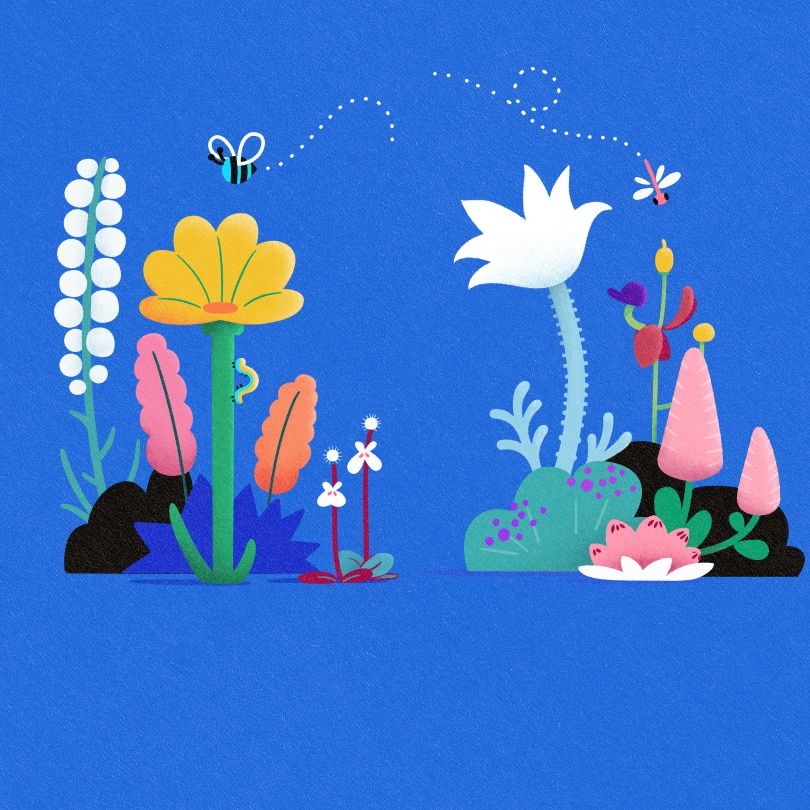
G.O.A.T AUSTRALIAN WILDFLOWER
Does Australia have a BEST wildflower? Hang on... what even is a flower? Dr Ann Jones and Belinda Smith count down the top 10 best wildflowers as voted by YOU in a special live show, The Hour of Flower. FEATURING: Tim Entwisle – Author, The Sceptical Botanist. Former CEO of the Royal Botanic Gardens in MelbourneChantelle Doyle - Research Associate, Centre for Ecosystem Science,
Flowers are disgusting, filthy, badasses
Quackery and Catfishing. Fake news doesn’t only happen on the human internet. Welcome to nature’s dark web.We didn’t TRY to make a spooky and disturbing episode... we just wanted to talk about plants with DUCK in the title. But oh boy, these flowers are savage! One of them has become internet famous for a detox that could literally kill you. Another catfishes its pollinators by
Wombat scratches butt on recorder, snorts, gurgles and leaves.
WTF NATURE. I give up.||A Message from Dr Ann - the What the Duck?! host and general dork.||I don't really give up. The recording I took for the latest season of Nature Sounds by Ann Jones was a ripper (in terms of wombat farts).This bit got edited out of the longer soundscape over there, because, it was determined, that a wombat walking in and scratching its butt ON THE MICROPH
Dinosaur died. No flowers at funeral
In fact, most dinosaurs never got the chance to stop and smell a flower... and it was all because of bad timing. Sad face.The meteor that killed all the dinosaurs (rude) actually kicked off flower supremacy on planet earth. Flowering plants are only about 135 million years old, yet they’re the most bio-diverse plants on the planet. Without them, no birds, no bees. Again, sad face
Duck on a screaming rampage wrecks Australia's 'quiet time'
It was a perfect night. But this duck had other ideas.The scene: A perfect, wonderful, windless night at a wetland.You couldn't ask for better conditions. The sun sets and the insects hum and eventually you hear a boobook and it's lovely… except one very loud duck keeps on yelling periodically the whole way through.It's like the thing KNEW I was recording. It goes on for hours.An
Its survival relies on idiotic male wasps bonking it
This flower takes needy to a whole new level! It was almost extinct. That was, until 2015, when a woman called Julie took it upon herself to make sure we didn’t lose the species altogether, and as it happened (baby) Ann Jones went along with a microphone. Now, it’s 10 years on, and Ann is older, greyer and more closely resembles a bearded orchid. But, given she hasn’t been made r
Who's your Daddy?
You probably have a daddy-long-legs in your house right now.But when is having a weird housemate in the corner ACTUALLY a good thing? Dr Ann Jones investigates.Featuring:Dr Samantha Nixon, University of California, San Francisco (UCSF).Dr Lizzy Lowe, Invertebrates Australia.Thanks also to Dr Bernhard Huber, Arachnid Curator at Museum Koenig for helping us get the facts right.Prod
Flies are probably better at picking up than you are
Flies have rhythm and choreography, could their moves make the next TikTok dance fad?Dune flies groove to their own beat in dance-circles and hoverflies use rhythmic movements in mating.Researchers found the dancing dune fly’s repertoire has specific moves for impressing a female and others for rival dance battles. Pretty fly for a dune fly.In Costa Rica the male red hoverfly rh
Duck, marry, avoid, friendzone
Live from the World Science Festival Brisbane What the Duck?! is playing a game and you get to decide: duck, marry, avoid, or friendzone.You'll hear about the natural world's romance, reproduction, and relationshipsOnce you've listened you can email whattheduck@abc.net.au to vote for how you would categorise snakes, birds, insects and mammals.Featuring:Dr Chstina Zdanek, Australi
What's with the electric eel's shocking attitude?
It seems absolutely bonkers that an animal can muster ELECTRICITY, especially enough to send out a zap like a taser.But that's exactly what electric eels can do, and the world record holder more than doubles the voltage of the Australian electricity supply.More than that, electric eels inspired the design of Volta's first batteries, but (hold onto your socks so they don't get blo
Gay animals: same-sex science
For around 700 years scientists observed same-sex pairings in as many as 1500 different species, but didn't record or publish their findings due to public perceptions.Now research is catching up and many papers on queer behaviour in nature have been published in the past two decades.This discussion was recorded live at Mardi Gras 2026 and presented by the Royal Zoological Society
Sex is Weird 7: Do we need sex?
Sex comes at a cost, there's energy, time, risks of predators, and diseases… so do we even need it?Asexual organisms don't seem to miss the dating scene, and yet here we are putting a whole lot of energy into sex, even when it doesn't lead to babies when same sexes attract.Of course, sex is a chance to genetically repair faults and outrun threats, but is the pay-off really enough
Sex is Weird 6: Virgin birth
It turns out not everyone was listening when it was written 'it takes two to tango' and some species can go it alone in their quest to reproduce. And then there's the plants that decided THREE or ONE was for them, never an even number.Why is sex so… suspiciously complicated?Sex is Weird is a series of What the Duck?! with Dr Ann Jones following the sexual evolution of the natural
Sex is Weird 5: Why does it feel good, anyway?
What is the role of pleasure in successful reproduction?Evolution says it's mightily important: every female vertebrate has a clitoris.Snakes have two!Female pleasure has been selected for.Making sex fun and pleasurable is a biologically sensible thing to do, more sex means more potential babies.Some studies of pigs and dairy cows have found an increase of up to 6% in successful
Sex is Weird 4: How to be hot according to nature
Do animals fall in love at first sight?Every species has different traits that are 'attractive' — they're showing off their DIY skills making a bower, vibrating sexy fruit fly songs, puffing up a wattle, or just having really massive moose… antlers.Is this innate attraction like falling in love or is it more like meeting a (really hot) investment advisor?Because these attractive
Sex is Weird 3: Sexy females fight back
The energy required to grow, birth and raise young is intense, so it's only fair that the female body has some tricks to make sure reproducing is worth it.From cryptic choice to immune system sperm blockers, the female reproductive system can be a literal maze for those seeking to gain access to her eggs.In the battle of the sexes, this is females fight back.Sex is Weird is a ser
Sex is Weird 2: Why do penises exist?
When it comes to sexual organs, the penis is really 'out there.' Name another organ that can change its form AND function in a matter of seconds!There's a lot of variety in the animal kingdom; from spikes and nails to coils and collagen — so, this appendage is worth investigating… close up.Sex is Weird is a series of What the Duck?! With Dr Ann Jones following the sexual evolutio
Sex is Weird 1: The world's first d*ck pic
When you really think about it, sex to make babies is WEIRD! You take an outie that has to get stuck inside an innie that links into a production line of eggs to assemble a perfect tiny being. It's so damn complicated!So why does it work like that?Join us at What the Duck for the first episode of a series where we figure out how living things went from splitting ourselves in half
Nature's Most Wanted: Can my dog inherit my house
In 2002 Gigoo became the world's wealthiest chicken when her owner left her £10 million in his will.How does a chook even open a bank account?Within legal limitations there are ways to provide your pets the lifestyle they're used to after you die.But what about divorce?Can you have visitation rights to see your goldfish?And when a dog's day in court climbs though the tiers of the
Nature's Most Wanted: Wild, but not free
A lost monkey in an Ikea carpark is an illegally traded pet, so does he have a legal owner?When it comes to animal ownership, courts turn to Roman-era laws to try and figure out if an animal is tame or wild.It may work sometimes, but leaves out the modern idea of the animal's best interests.And it doesn't explain how an elephant can have a criminal rap sheet.Content warning: This
Nature's Most Wanted: Trunk and disorderly
How much booze does it take to intoxicate an elephant?The answer isn't as much as you might expect, because not all guts are created equal when it comes to metabolising alcohol.This explains why an elephant might be considered a lightweight and your donkey got into a fight last weekend.But alcohol isn't the only cause of misbehaviour — so what motivated the legless serial doorbel
Nature's Most Wanted: Fowl play with real-life angry birds
Forget feathered friends — these are our feathered foes.They can wield knives, get involved in the world of organised crime and drug dealing, and even shut down the Large Hadron Collider.But the most pressing question is, why did the duck cross the road at speeds so high local law enforcement was on the case?Featuring:Dr Christine Sutton, particle physicist and past editor of CER
Nature's Most Wanted: Murder (but not crows)
The fear of being eaten by an animal is so visceral that a mass psychosis, featuring a monkey man, once swept across Delhi.But in the event of an actual attack, investigators look for specific forensic clues to identify which predator was responsible.Was the perpetrator human or animal? Or in one infamous case in the US, was it human … or owl?Featuring:Phoebe Judge, host of the p
Nature's Most Wanted: Cat burglars and robber duckies
Leonardo da Pinchy is a literal cat burglar with more than 350 pieces of evidence against him — evidence that's easy to confirm because when he steals his neighbour's underwear, he brings it home with a satisfied look of great pride.Steven Seagull is banned from the local corner store after a six-year beef-flavoured-chip-thieving spree.Then there are the monkeys holding phones ho
Nature’s Most Wanted: Odour in the court
Pigs tried for murder, weevils expelled from heaven and how a bloke dressed as an executed French monkey became mayor of an English town.Topsy the elephant travelled the US performing for cheering circus-goers, but when her drunken trainer rode her into town wreaking havoc, was that her poor decision-making … or his?Content warning: This program contains stories where animals are
INTRODUCING: Nature's Most Wanted
Dr Ann Jones is bringing true crime and natural history together with Nature's Most Wanted, a new series from What the Duck!? investigating when animals get on the wrong side of the law.From cats stealing underwear to roosters accused of witchcraft; human-eaters to parrots with opioid addiction; this series promises to get to the bottom of why animals turn to crime.Dr Ann Jones e
Invasive species: a science comedy debate
Join What the Duck?! at a science comedy debate called Sci Fight.Sci Fight brings scientists and comedians together to examine serious topics in a silly way.The topic up for debate is that nature doesn't care where an animal is from.Featuring:Alanta Colley, science communicator, host and founder of Sci FightAffirmative:Aaron Agostini, biologist and researcher at the University of
Why snakes remain deadly even after they're dead
At first, you might think it is a plot from a zombie movie: that undead animals are coming for you.But it turns out that Australia's animals aren't just dangerous when they're alive — they can be deadly even when they're dead.Ann Jones is joined by science reporter Belinda Smith to examine why snakes can still bite up to 45 minutes after death and are potentially dangerous for ye
How a rat's smelly towel might be key to rewilding
Bush rats are not black rats — that's the first thing you need to know.Ann Jones is joined by ABC Top 5 scientist Dr Patrick Finnerty to understand why researchers are going around sniffing bush rats — and how it might help reintroduce them to Sydney's nature reserves.Find out more about the Top 5 science media residency here.Featuring:Dr Patrick Finnerty, conservation ecologist
How Marion Anstis became the tadpole whisperer
Marion Anstis pursued her love of tadpoles and frogs on afternoons and weekends, writing papers for scientific journals despite not studying zoology at university.When she retired from her job as a music teacher, she finally had the time to pack her campervan and travel the country, chasing wet seasons and documenting the frogs she found.The result of that fastidious research ven
Diane Purcell on how algae grows on you
From the rolling hills of country Ireland to rolling waves beneath her boat docked in Hobart, Dr Diane Purcell has explored the most extreme places algae survive.She's also explored the prospect of its survival away from Earth when she worked at NASA studying extremophiles.Some of Diane's earliest research was looking at algae behaviour when it's kind of sleep deprived, and algae
The field guide to a birding life: Peter Menkhorst
Peter Menkhorst is the mammalogist who wrote the birding bible, The Australian Bird Guide.As a boy, Peter would go birdwatching with his dad, setting up in a hide before dawn to observe malleefowl tending their mounds — and ignoring ongoing attacks from mosquitoes!His professional work ranged from surveying mammals and developing National Parks, to ecological research and managin
Creepy crawlies across continents: why Tanya Latty loves bugs
Every superhero has their origin story, and a superhero of science is no different…From watching slater bugs and catching non-venomous snakes in her garden just outside Toronto in Canada, to harnessing lizards with palm fronds in the Caribbean, Tanya Latty was always going to study animals.But it wasn't until an invertebrate zoology class that her "mind exploded" and her passion
Ranger Stacey's totally wild life on and off TV
Nineties kids didn't dawdle on the way home from school in the afternoon. This was the age of appointment television, and that appointment was with Totally Wild.From 1992 it was beloved afternoon viewing for almost 30 years, hosted with a massive smile (and a decent fringe) by Ranger Stacey.Every superhero has their origin story, and a superhero of environmental education is no d
Modern dogs: What have we created?
The influence of selective breeding by humans has created a doggo for every occasion, but it's not without problematic results.Some breeds have breathing difficulties, hip problems, aggression, or anxiety. There are dogs with ADHD and others with depression.Does our longest-term relationship need couples therapy?Featuring:Dr. Annika Bremhorst, founder of Dogs and Science, and can
Dogs in Australia: What is a dingo?
This is the story of the domesticated animal that feralised itself.Where did dingoes come from and when?Where does a wild dog stop and a dingo begin?How much can genetics really tell us about Australia's only native dog — and how long do you have to live somewhere to be 'native'?Featuring:Professor Clive Wynne, animal psychologist, Arizona State UniversityDr Angela Perri, zooarch
Woofs and wags: What's your dog telling you?
Are puppy dog eyes really a sign of love, or does Fido just want a lil snack?Can dogs really "speak" by pressing talking buttons, or do they just make great content for TikTok?There's more to canine communication than howls and growls — and a wagging tail could be telling you more than you think.Featuring:Dr. Mia Cobb, Chaser Innovation Research Fellow (Canine Welfare Science), A
Good dog: Survival of the friendliest
'Man's best friend' sure sounds better than 'obligatory symbiont', but what are the true dynamics at play?There's no denying the bond people feel and the attachment dogs have for their humans, but if we put that beautiful relationship under scientific scrutiny, does it hold up?Can any dog go 'full Lassie' if you (or Timmy) get stuck down a well?Will your dog save you?Featuring:Pr
Designer dogs: What is a breed anyway?
There's designer clothes, but they have nothing on designer dogs!They come in a huge range of shapes and colours and sizes, from the tiny Chihuahua to the Great Dane.In the animal world this much variation usually means different species, but not for dogs — so where did they all come from?And what role did Victorian-era rats play in the development of 'breed standards'?Featuring:
Wolf to woof: Did we make dogs?
The relationship between humans and big scary wolves has come a long way to give us tiny fluffy lap dogs with very discerning tastes in expensive food.Whose idea was it? Was it the wolves who wanted the warmth of the fire, or the humans who wanted protection from the other scary carnivores?And take a look at the first archaeological evidence of a beloved family pet preserved with
Is the animal kingdom ruled by tiny worms?
Nematodes are found in every environment on Earth and can survive in some seriously extreme conditions.They will come back to life after being frozen for 40 thousand years! WHAT THE DUCK?!There's so much more to these creatures than a chocolate square for an itchy rear end…Sign up here for the nematode appreciation society.Featuring:Dr Mike Hodda, senior principal research scient
Warehouse, cemetery, playground: Australia's biodiversity vault
CSIRO's National Research Collection in Canberra is where millions of dead things bring life to Australian science.The specimens, collected over many decades, have just been very carefully moved into a new purpose-built facility named Diversity.The What the Duck?! team had a "sticky beak" inside to find DNA extraction robots, extinct birds, predatory flies, and a few thousand sli
Girls just wanna have frogs
After receiving a heartbreaking email, Ann goes on a mission to prove that 'girls DO like spiders, frogs and all things nature'.'Featuring:Lyra and Julie Gould from CanadaDr. Jodi Rowley- Australian Museum and University of NSWProfessor Maydianne Andrade- University of TorontoDr. Amber Beavis- Office of the Chief Veterinary OfficerAssociate Professor Tanya Latty- Sydney Universit
The bird-eating centipede
It's like a classic horror film.There are huge fangs, a segmented body, a remote location, the ocean bashing against cliffs, you're all alone and there's no one to help.The first bodies that turn up are of the children… of petrels.Featuring:Luke Halpin, PhD Researcher, Monash UniversityProduction:Ann Jones, Presenter / ProducerPetria Ladgrove, ProducerJoel Werner, Script EditingT
No, centipedes don't have 100 legs
Turns out centipedes versus millipedes isn't as simple as a numbers game.But here at What the Duck?! we never skip leg day.Featuring:Dr Juanita Rodriguez, Australian National Insect Collection, CSIRO.Dr Bruno Alves Buzatto, Flinders University.Luis Villazon, Science Educator UK.Production:Ann Jones, Presenter / Producer.Petria Ladgrove, Producer.Additional mastering: Angela Grant
Are animals musical?
Can animals create, or even enjoy music?Ann rips through the animal kingdom to check out the musical talent of some likely and unlikely performers.Featuring:Dr. Stuart Watson, University of Zurich.Dr. Chiara De Gregorio, University of Torino.Assistant Professor Adena Schachner, University of California.David Teie, Musician and composer, Music for Cats.Associate Professor Cameron
The trap is set: Webs, hypnosis, and mucus tubes
We'll all go to trouble to get a good meal, but some animals take it to the extreme.Some build architectural masterpieces to entrap their prey, or use body parts as lures.But what is your cat doing when it makes the 'ek ek ek ek?' Is it trying to bewitch the birds?Featuring:Professor Kris Helgen, Australian Museum.Julia Henning, PhD candidate, University of Adelaide.Associate Pro
Mushrooms: Is the future fungi?
Fungi are already hard at work helping trees survive drought, recycling fallen logs, rotting away carcases, and helping human digestive systems, but could they do more?Is our future made of fungi?Research has shown fungi's potential to make medicine, clothing, and cheap fire-retardant housing, but trying to isolate and harness just one species is not an easy task given they get i
Mushrooms: What are they, really?
Mushrooms were once lumped in with plants, and they stayed there well after science knew better.But if a fungus is not a plant… is it a closer relative of yours than you might've thought?With millions of species on Earth, and many that live inside you, it seems important to know about the kingdom of fungi.Featuring:Tom May, senior principal research scientist at the Royal Botanic
Mushrooms: Why do they kill?
As daily updates about the 'mushroom murders' monopolised newsfeeds around the country, the What the Duck?! team started questioning the motives. Not the human ones — the fungi ones.Why would a mushroom need a toxin so powerful it takes just a few grams to kill a human?And where's the warning? Nature usually throws up alerts for poison, like bright colours or spots, but the dea
What the Duck?! serves mushrooms
Have you found yourself wondering why a simple brown mushroom would develop a toxin so strong that just a few grams could kill a human?What the Duck?! is investigating the motives of toxic fungi and exploring the curious world of puffballs, fly agarics, stinkhorns, and death caps.Powerful toxins are scary, but there are varieties that could help humans in medical treatment, space
Murder birds: The cuckoo's killer instinct
Cuckoo babies hatch in the nests of other bird species then quickly, often brutally, make sure they're the only baby to get fed…So how does a cuckoo know how to be a cuckoo?Well… that is a ducking good question.Featuring:Cassandra Taylor, ANU.Claire Taylor, Uni of Melbourne.Production:Ann Jones, Presenter / Producer.Petria Ladgrove, Producer.Joel Werner, Script Editing.This episo
Slug slime and frog glue: Get stuck into nature's stickiness
There are so many sticky things in nature, but what's the nature of their stickiness?Could slug mucus or frog ooze be used in medical treatments?Ann puts on her spider-woman gloves to find out.Featuring:Ella Tyler, wife of the late Prof Mike Tyler.Prof Andrew Smith, Biology, Ithaca College.Prof George Murrell, Director Orthopaedic Research Institute, St George Hospital, NSW.Produ
What's brown and sticky?
If you ever wanted to be able to stick to walls like Spider-Man, then listen to this!How do geckos and ants walk easily up walls and across the ceiling?Is an insect foot sticky in the same way as a reptilian tootsie?And how does underwater stickiness compare? Just how is that barnacle attached to that boat?Featuring:Rishab Pillai, James Cook University.Dr Christofer Clemente, Uni
Mars on Earth: Salt lake life
This place is so extreme that NASA sends scientists to test equipment for Mars missions. And yet, Australia's salty lakes are full of life.Featuring:Bonnie Teece, Postgraduate Researcher at UNSWAngus D'Arcy Lawrie, PhD Student at Murdoch University.Production:Ann Jones, Presenter / Producer.Petria Ladgrove, Producer.Joel Werner, Script Editing.This episode of What the Duck?! was
Is anything true blue?
Ann finds out that birds are not really blue. Not even bluebirds. If they're not blue, then what the duck are they?Featuring:Richard McClure, Stems Flower Market, Ballarat.Nate Byrne, ABC News Breakfast Meteorologist and science nerd.Prof Andrew Lowe, University of Adelaide.Dr Kate Umbers, University of Western Sydney.Production:Ann Jones, Presenter / Producer.Petria Ladgrove, Pr
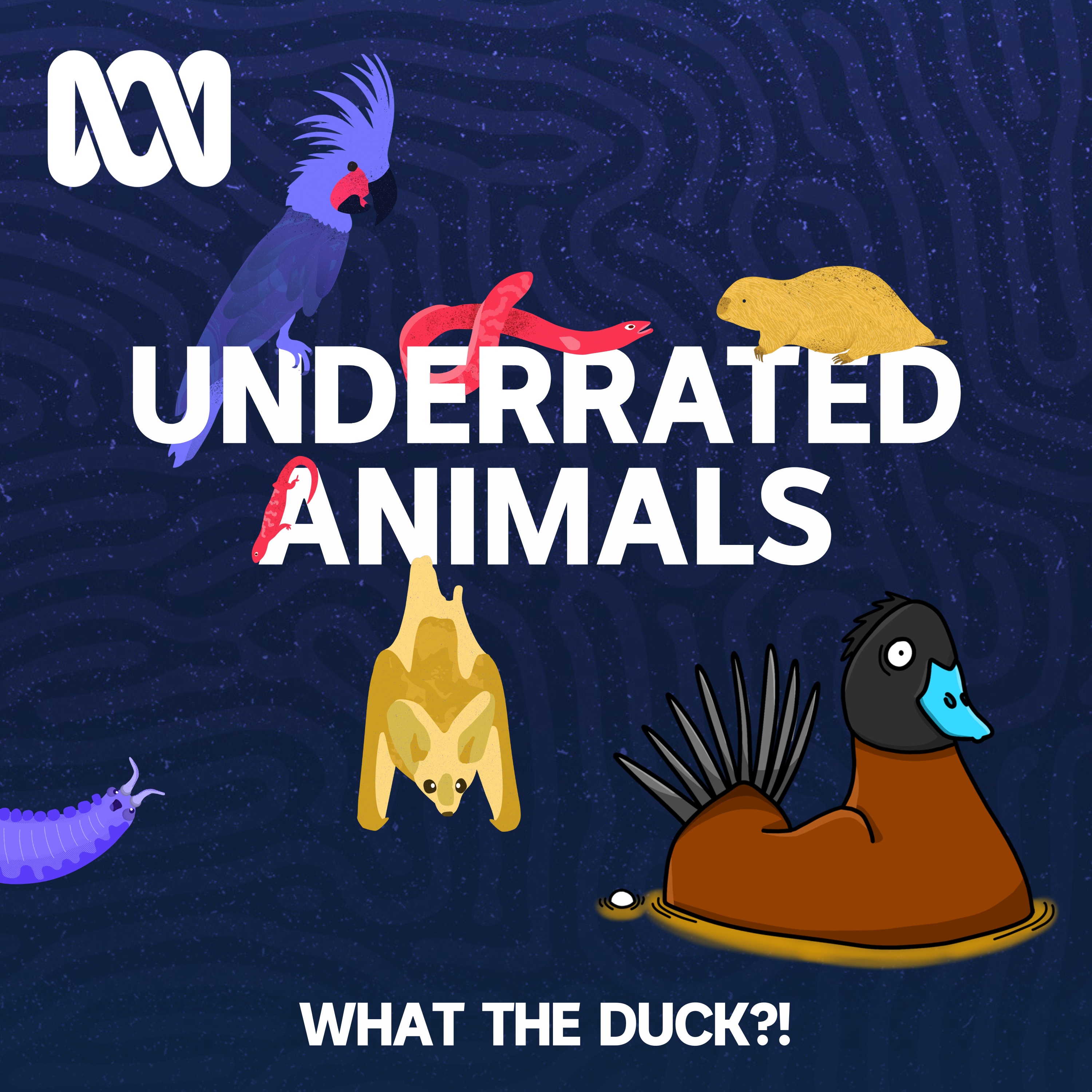
Australia's most underrated animal: Winner!
Listen back to the What the Duck?! special broadcast with Dr Ann Jones and Cassie McCullagh.After 65,000 votes, Australia has spoken — the rakali has been crowned Australia's most underrated native animal!Raking in a whopping 20 per cent of the votes cast, the water rat was well out in front.Here are the results:1.Rakali2.Palm cockatoo3.Giant cuttlefish4.Dugong5.Marsupial mole6.T
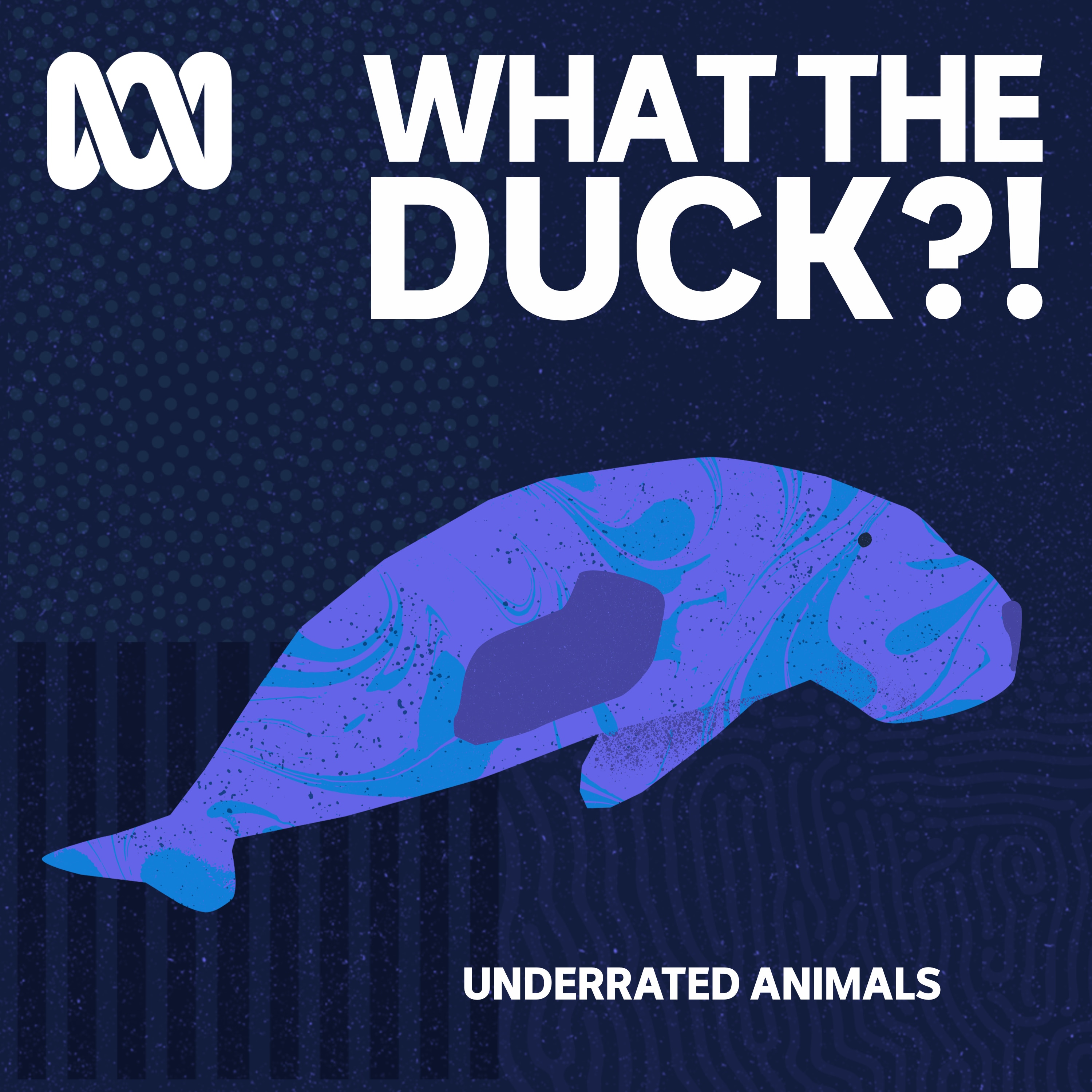
Underrated animals: Dugong
They live off seagrass, and sound like a teeny bird, but can weigh in at more than 400 kilograms and will cut you with their tusks.Dugongs (Dugong dugon) were once confused for mermaids.Yanyuwa people in the Golf of Carpentaria have observed their roles in family groups and identified 16 different types of dugongs.Cast your vote for Australia's most underrated animal here.https:/
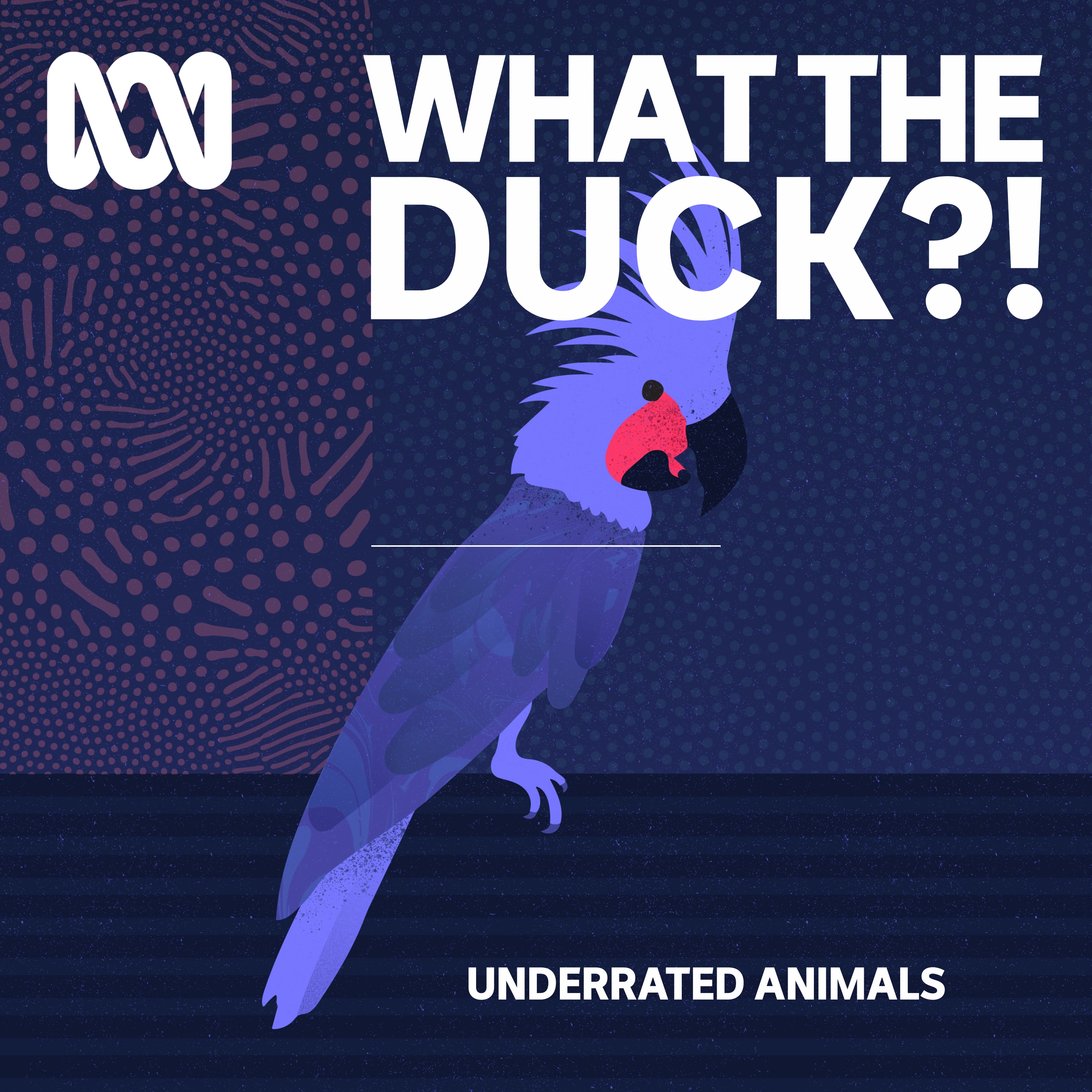
Underrated animals: Palm Cockatoo
It's a bold claim, but the palm cockatoo might be the most punk-rock bird of all.The black and scarlet parrot lives in the rainforests and woodlands of Far North Queensland, as well as the Aru Islands and New Guinea.With a wingspan of 1.5 metres, the palm cockatoo (Probosciger aterrimus) is an impressive bird, with a black mohawk and a powerful beak.Cast your vote for Australia's
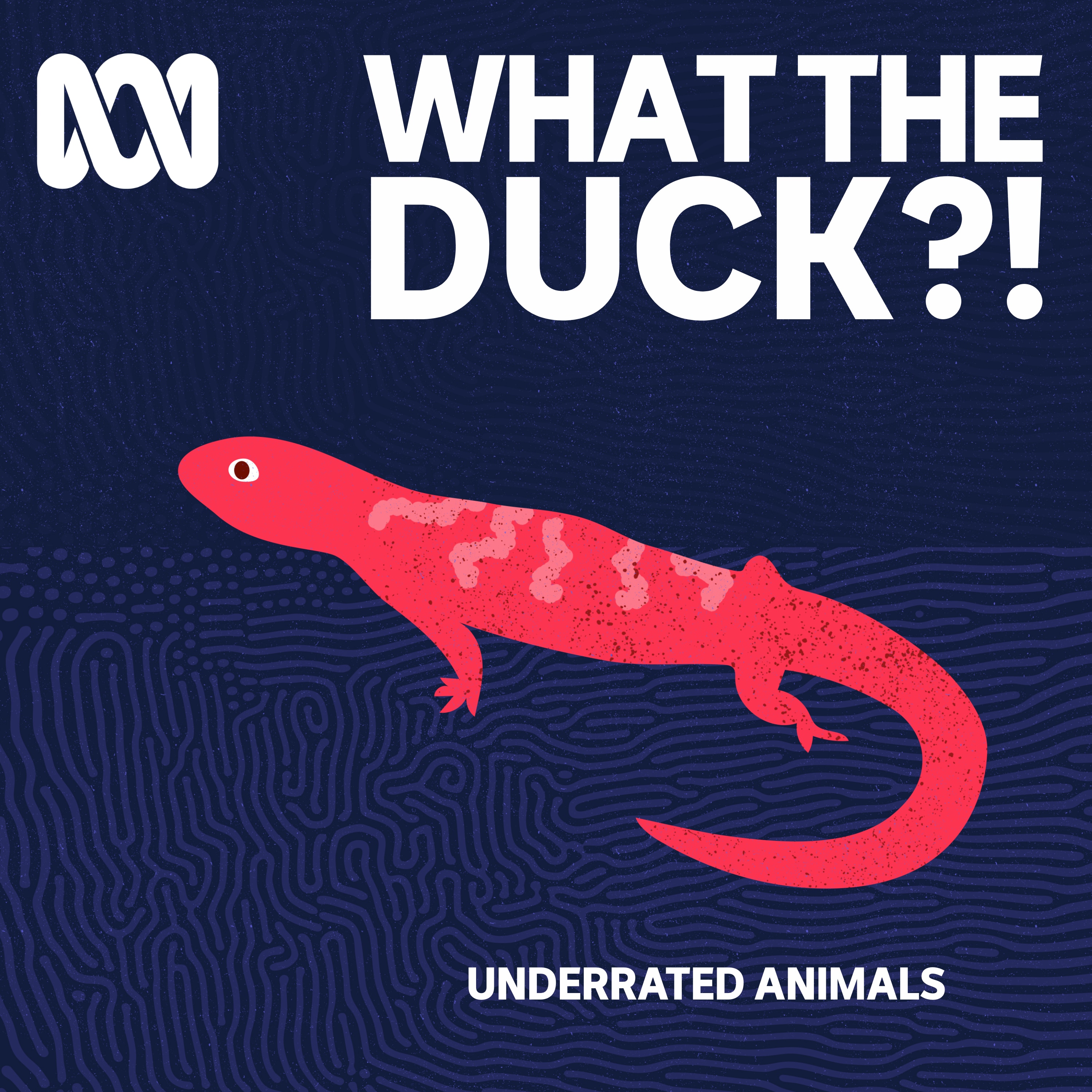
Underrated animals: Great desert skink
This little orange lizard lives with his mum and poos outside. What's not to love?The great desert skink (Liopholis kintorei) can be found in the deserts of the Northern Territory, South Australia, and Western Australia.They live in large burrows in family groups, which is extremely unusual for reptiles.Cast your vote for Australia's most underrated animal here.https://www.abc.ne
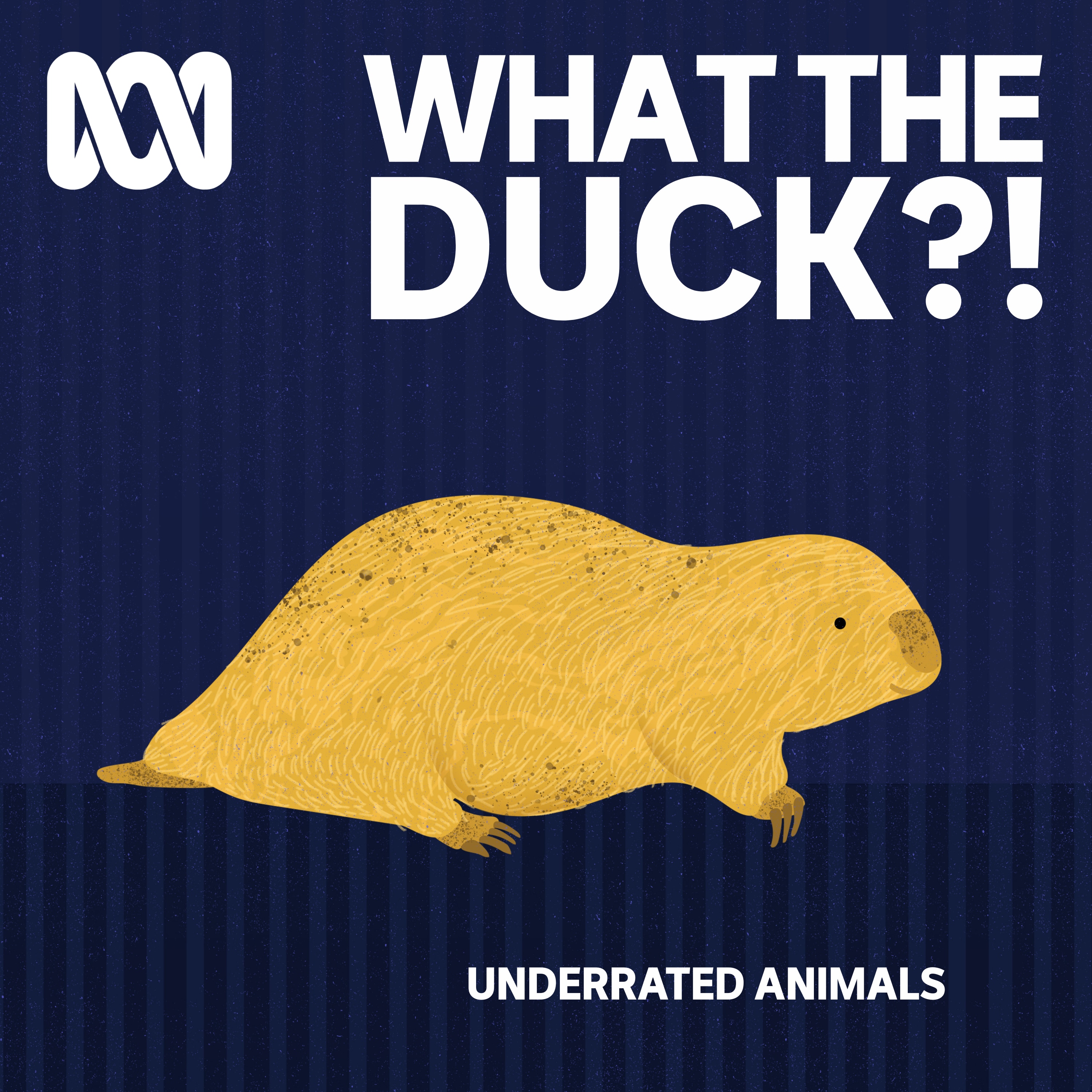
Underrated animals: Marsupial mole
What has no eyes, no ears, and is barely ever seen? It's no riddle — it's the marsupial mole!These tiny, golden creatures like to burrow through the sands in central Australia, making the two species of marsupial mole (Notoryctes) almost impossible to find.Cast your vote for Australia's most underrated animal here.https://www.abc.net.au/news/science/2025-08-01/science-week-underr
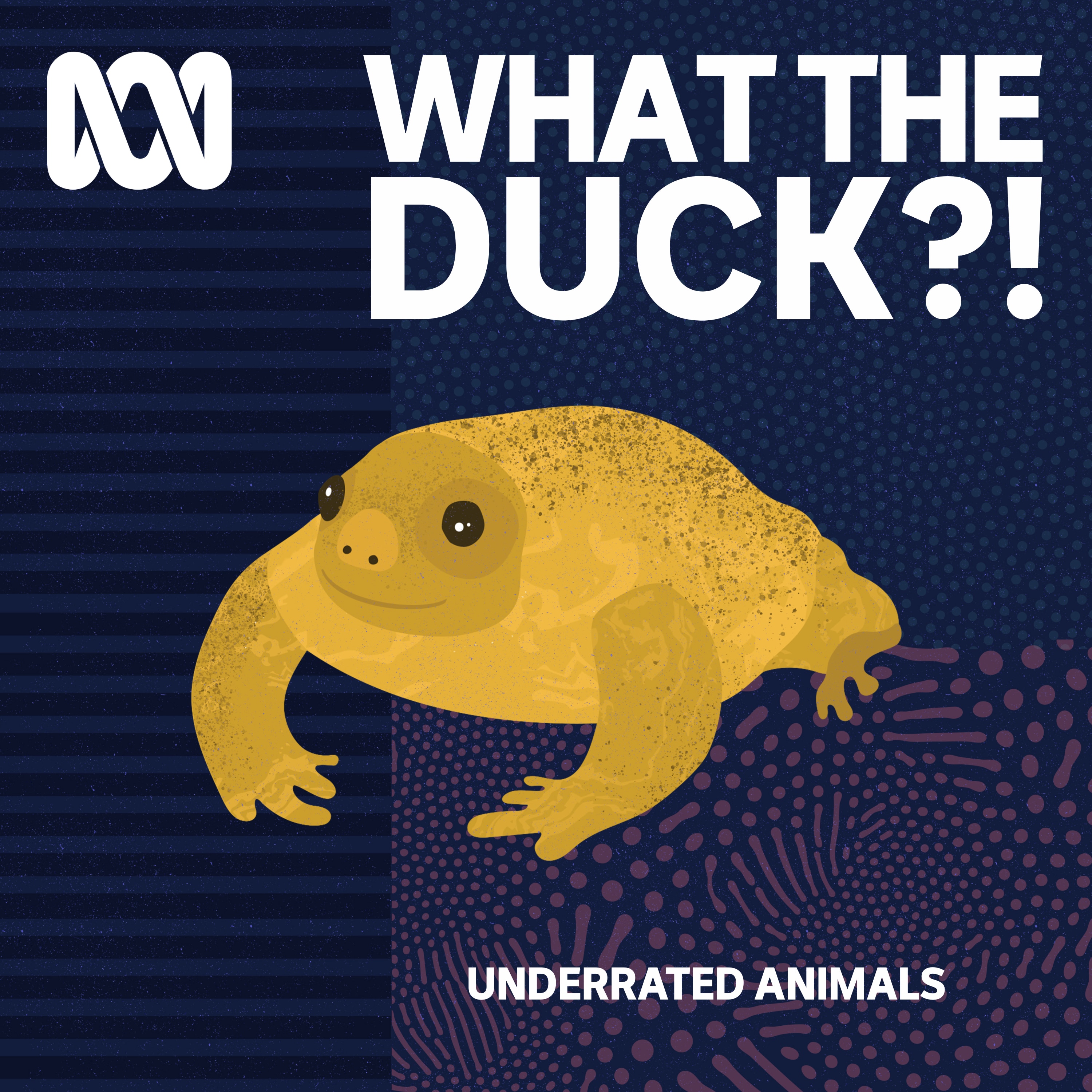
Underrated animals: Turtle frog
This tiny frog is pasty white, with big arms, a teeny head, and is — somehow — still absolutely adorable.The turtle frog (Myobatrachus gouldii) can be found in a small part of south-west Western Australia.They mostly live underground, and are one of only a few species of frog that burrow forwards instead of backwards.Cast your vote for Australia's most underrated animal here:http
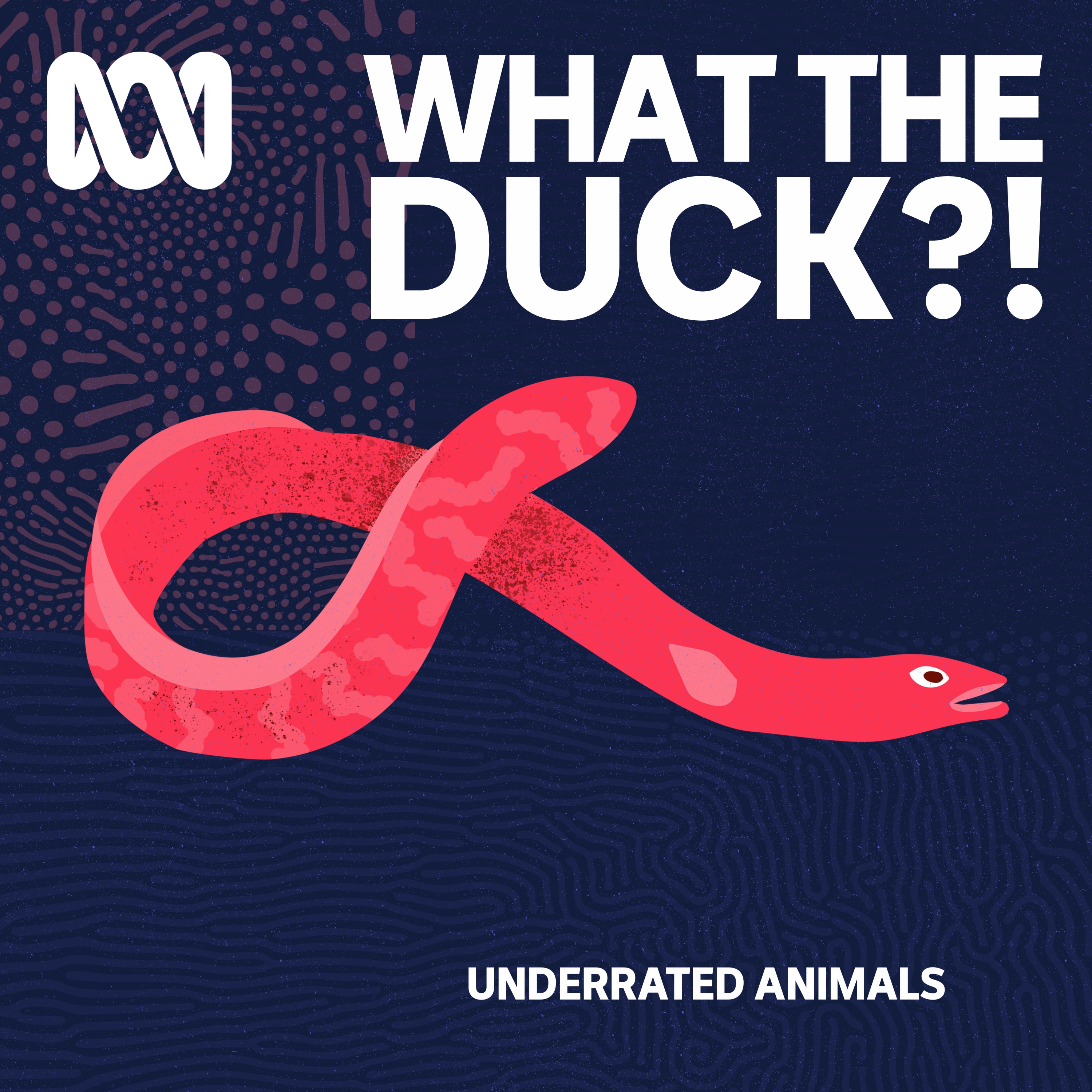
Underrated animals: Short-finned eel
They can travel over land, climb walls and take down large prey. And that's all before the short-finned eel (Anguilla australis) makes it out into the ocean for their epic migration to mate.The location is so remote, scientists still don't know what happens while they're there.But then, as new baby eels, they need to swim thousands of kilometres back to the Australian mainland —
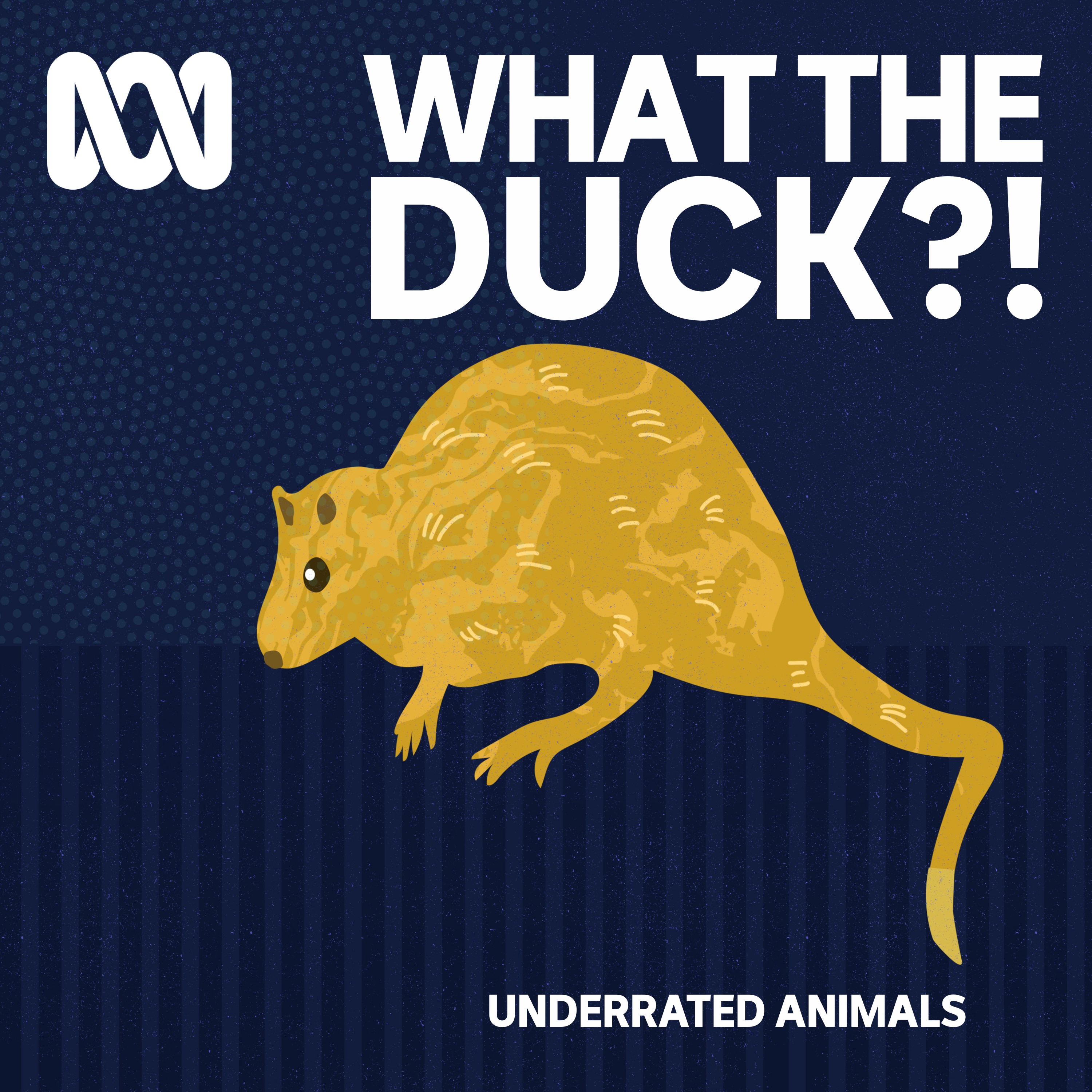
Underrated animals: Rakali
Sure, it's a rat, but it's Australia's own cheeky little water rat!The rakali (Hydromys chrysogaster) is Australia's largest rodent, and can be found in the waterways all around Australia.Cast your vote for Australia's most underrated animal here:https://www.abc.net.au/news/science/2025-08-01/science-week-underrated-australian-animal-vote/105582104Featuring:Emmalie Sanders, Charl
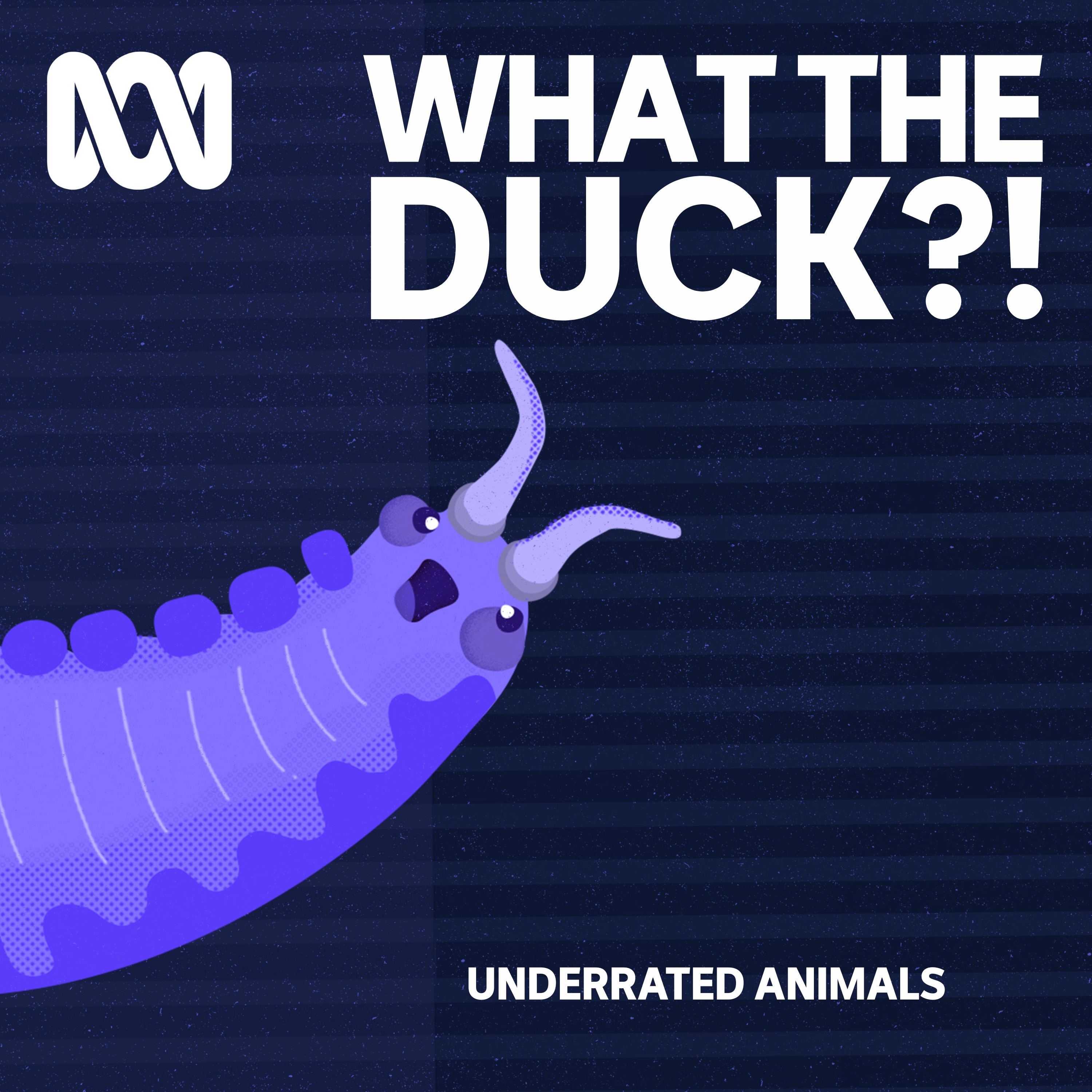
Underrated animals: Velvet worm
They shoot glue, puree their enemies, and are about the size of a leaf.With 140 species of southern velvet worms (Peripatopsidae), and most of those in Australia, these tiny creatures are our home-grown invertebrate.They normally live in rainforests, under logs or leaf litter, and they like to keep it damp and dark.Cast your vote for Australia's most underrated animal here:https:
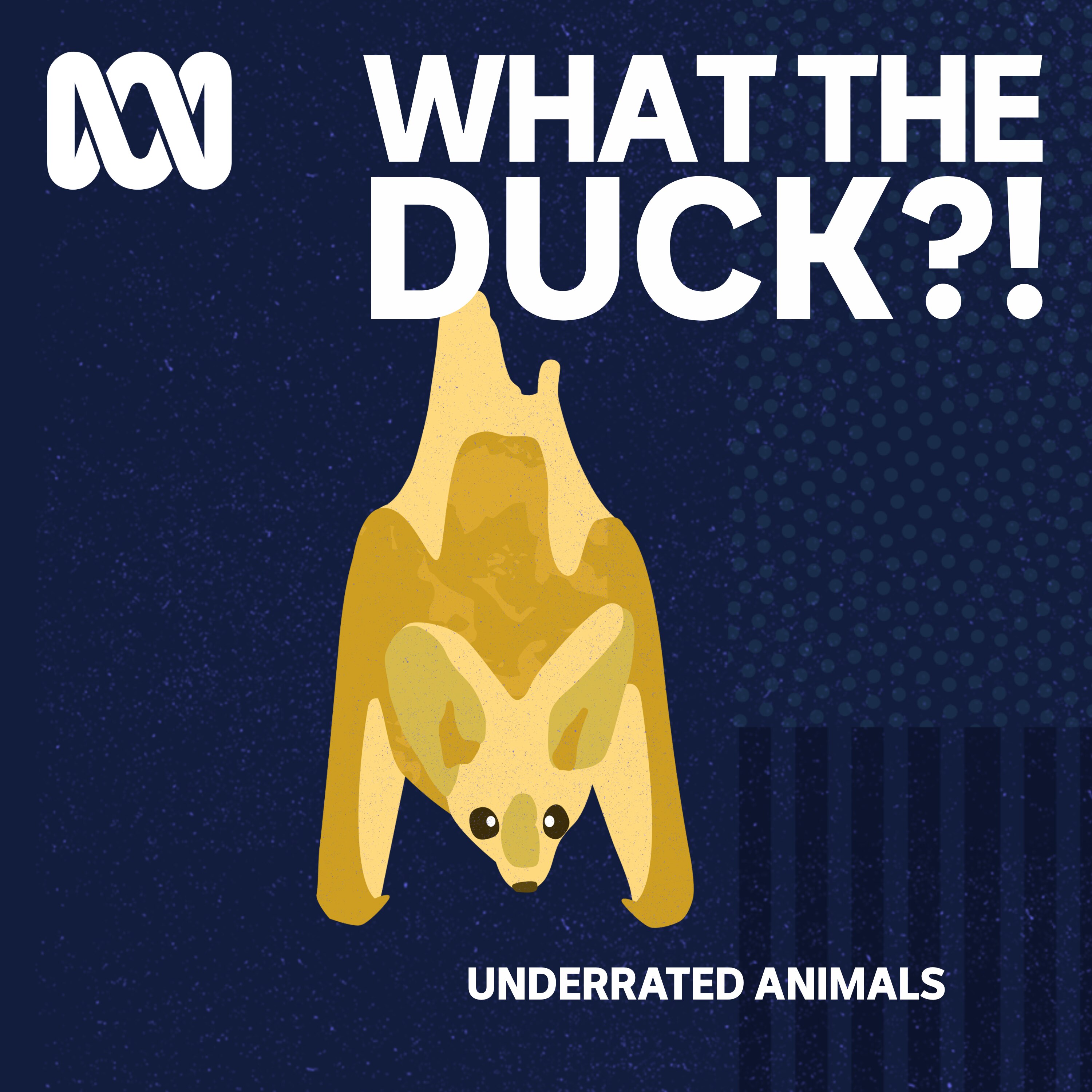
Underrated animals: Ghost bat
The ghost bat (Macroderma gigas) is Australia's only carnivorous bat, so it's probably not a good idea to make fun of their giant ears and unique nose.They live in large colonies of up to 1500 individuals in northern Queensland, Western Australia and the Northern Territory, roosting in caves, and old abandoned mine shafts.Cast your vote for Australia's most underrated animal here
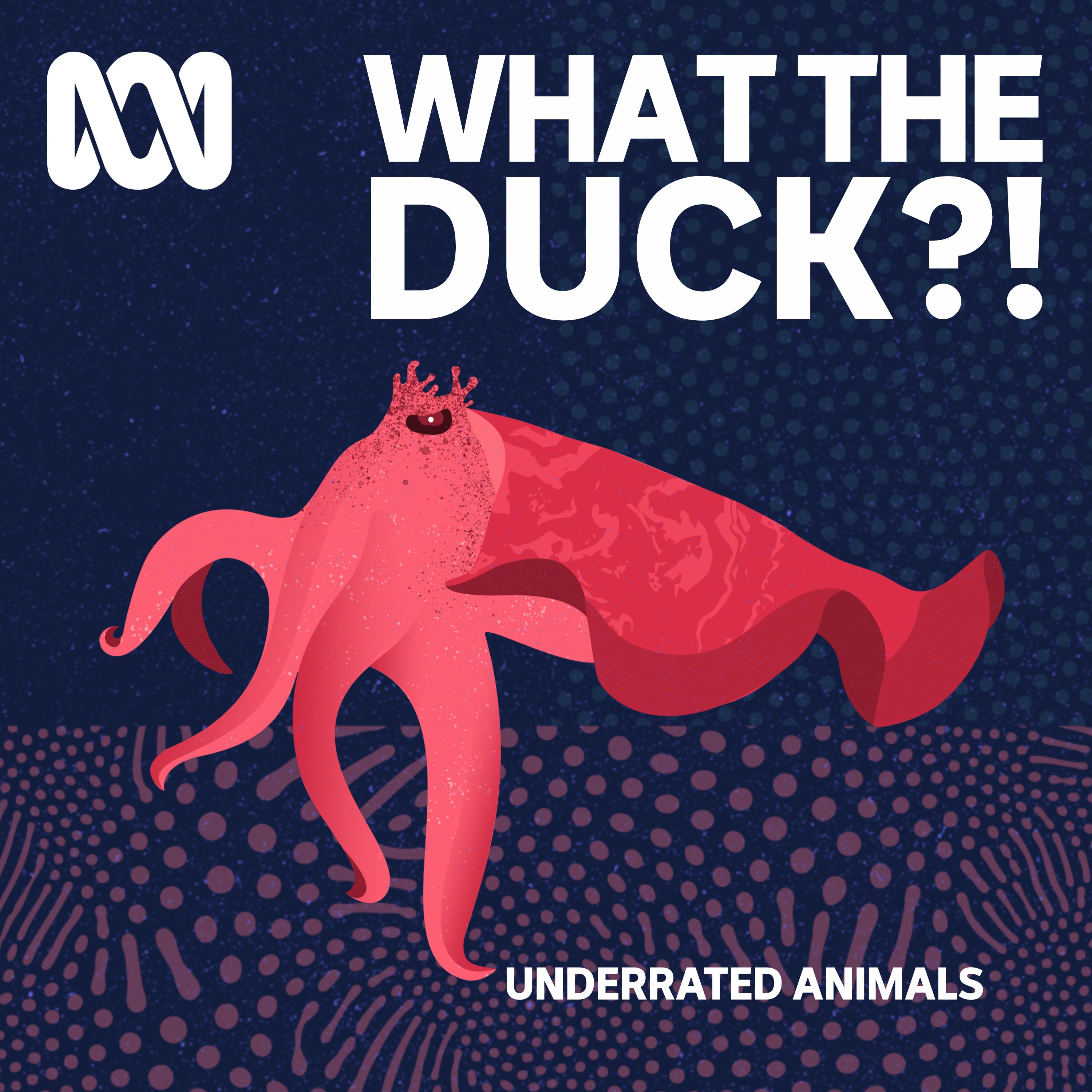
Underrated animals: Giant cuttlefish
They can grow up to a metre and the world's largest cuttlefish species can also disappear in a puff of ink and mucus.The giant cuttlefish (Ascarosepion apama) is an oddball, and you can catch a glimpse of them around the whole bottom half of Australia — all the way from Brisbane to Shark Bay.Cast your vote for Australia's most underrated animal here:https://www.abc.net.au/news/sc
What's in your freezer?
Move the peas over to find that Australian freezers have seals, kangaroo penises and the DNA of 'the Chanel of goats.'Featuring:Dr Natalie Warburton, Murdoch University. Dr Jillian Garvey, La Trobe University. Dr Nicola Rivers, Monash University.Dianne Hakof, Hospital Manger Animal Health Department Zoos SAProduction:Ann Jones, Presenter / Producer.Petria Ladgrove, Producer. This
Self-medicating species: Animals that say yes to drugs
It turns out self-medicating and herbal remedies are not exclusive to humans.From cats eating grass, to elephants making medicinal tea in their throat pouch — the animal world has its own prescriptions.And naturally, there's plenty of digging through poo involved in this scientific research!Featuring:Dr Kevin Feeney, Central Washington University.Professor Michael Huffman, Univer
Old and smelly: Farts from the past
Fossils tell us a lot about the past, but are there fossilised farts? (Spoiler, YES!)Look back at great farts of history, and the story of methane.Do birds not fart?And which creature is responsible for the stinkiest?Listen to part one (Does it Fart?!) here.Featuring:Dani Rabaiotti, Author of Does it Fart? and Zoological Society of London.Dr Nick Gales, Former Head of Australian
Does it fart?
Farts are not just for laughs. There are farts for survival, for communication, and even to attack!But it turns out it's tricky to get scientists to agree on what actually constitutes a fart.Still, from tiny fish, ants, and spiders, to manatees, primates, and blue whales — is it as simple as the bigger the creature, the bigger the fart?Featuring:Dani Rabaiotti, Author of Does it
Hybrids, dog breeds and DNA: What makes a species?
It's a seemingly simple question from What the Duck?! listener Skylar: how do scientists determine a new species?Turns out, it's complicated.And it's got Ann Jones impersonating a dog on the internet to try to find out what breed she is, as well as asking, 'what is a species anyway?'.Featuring:Skyla Seltzer, What The Duck?! listener.Beanz and Henry the dog.Link Olson, Curator of
Modern dogs: What have we created?
The influence of selective breeding by humans has created a doggo for every occasion, but it's not without problematic results.Some breeds have breathing difficulties, hip problems, aggression, or anxiety. There are dogs with ADHD and others with depression.Does our longest-term relationship need couples therapy?Featuring:Dr. Annika Bremhorst, founder of Dogs and Science, and can
Recommended

V180 Daily Devotion

Triple M Rock

9News Podcast
Triple M Breakfast with Kaz & Tubes - Triple M Hobart 107.3

Aussie Real Estate Podcast

Raising Teens with Collett Smart

Kids Ministry & Leadership Podcast

Coaching Hypnosis

The Unplayable Podcast
The Kylecast

Deepthink
Australian Dental Council Exam Prep Podcast
