Draft Zero: a screenwriting podcast
Two emerging screenwriters – Chas Fisher and Stuart Willis – try to work out what makes great screenplays work. Discovering what it takes by analysing what successful writers put on the page.
Episodes
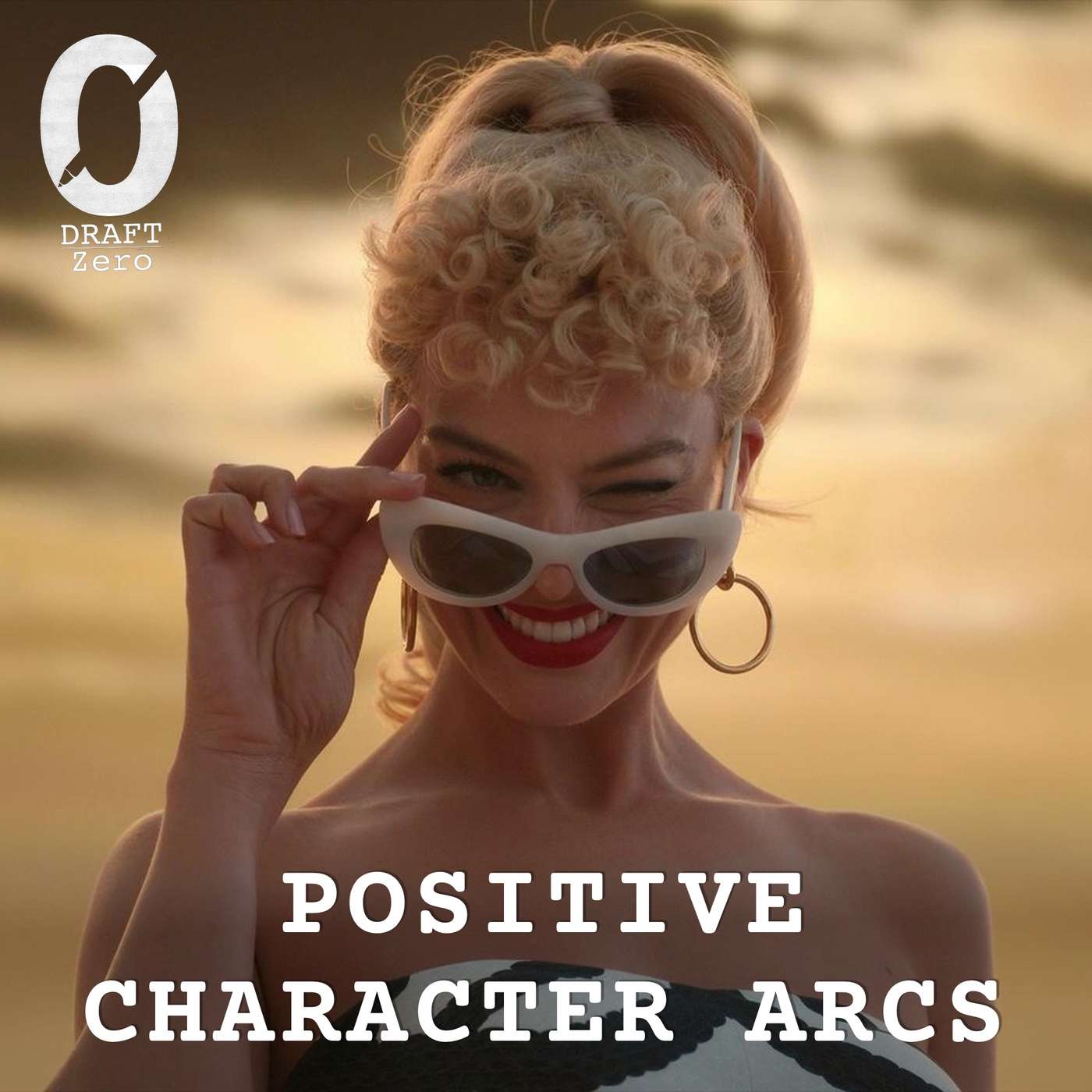
DZ-130: Positive Character Arcs
Listen to understand how to dramatize a character's internal change.
Welcome to our third entry in our character arc series; and the first where we talk about characters that actually change. And positively, too.
We deep dive into BARBIE, WIDOWS and ALL OF US STRANGERS to work out what makes an arc feel positive -- even if the film itself is heartbreaking. All three films are "positive
Teaser: Positive Character Arcs
Teaser for our next episode: DZ-130. Please watch BARBIE, WIDOWS, and ALL OF US STRANGERS so you can learn about positive character arcs.
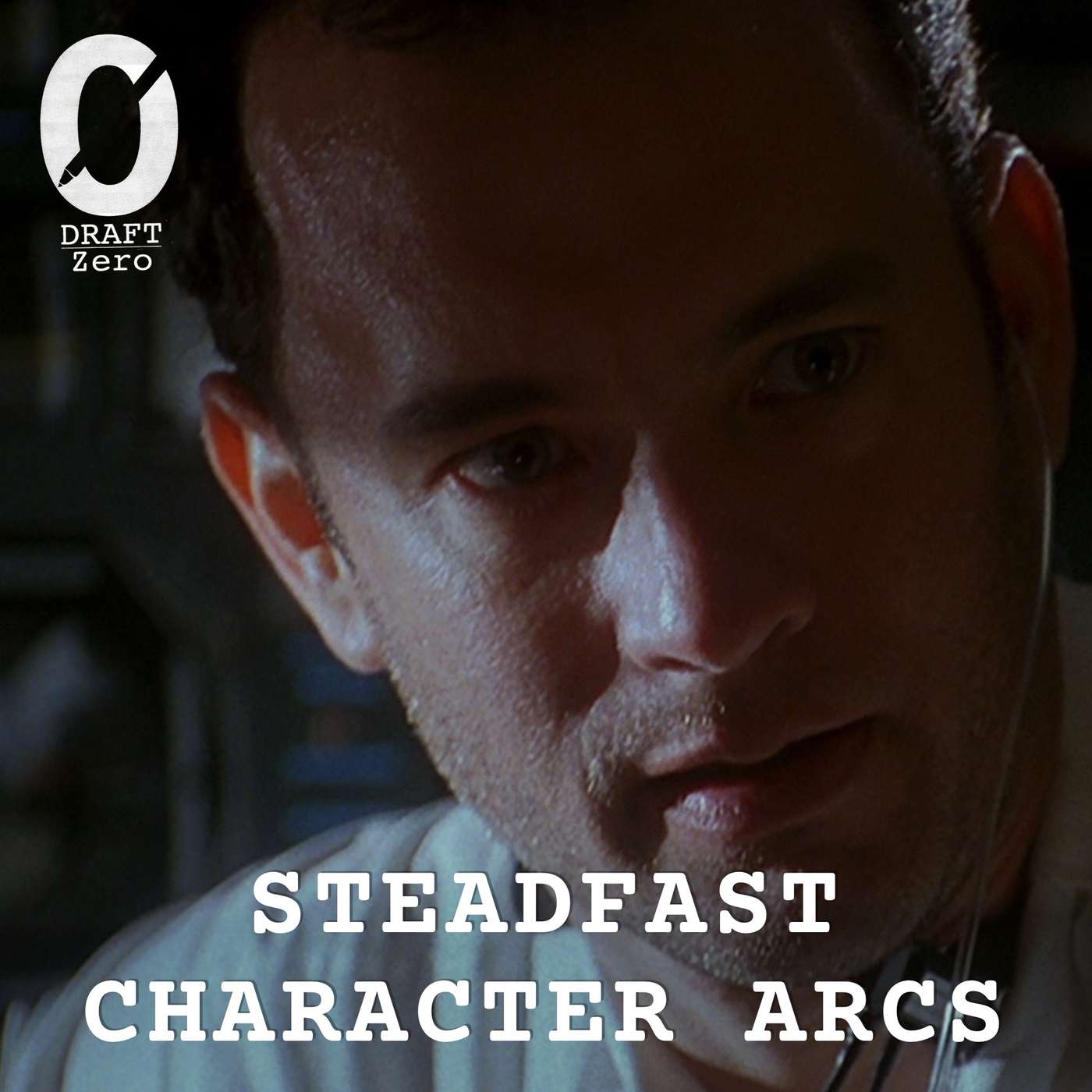
DZ-129: Steadfast Character Arcs - Agents of Change
Listen to learn how to move an audience with a character who never changes.
Do characters need to change for you to have a satisfying story? That's a question we've been asking since, like, episode five of this podcast. And we're finally talking about them - whatever you call 'em: steadfast, resilent, or flat arcs.
To that end, we breakdown MOANA, APOLLO 13, and THE DRESSMAKER to work o
DZ-128: What even is a Character Arc?
Listen to separate the three layers of an arc -- does the character change? How do they feel about it? And how is the audience positioned to feel about it?
Stu, Chas and Mel finally begin their long-awaited journey into CHARACTER ARCS. In this "primer" episode, we try find some learnings and analytical lenses that we can then apply in future breakdowns.
In this episode, we explore diffe
DZ-127: Secrets and Clues 2 - The Cost of Revelation
Listen to learn the emotional impact of revealing secrets vs discovering them.
In this episode Stu, Chas and Mel apply the Landmark–Hidden–Secret framework (from DZ-126) across two very different genres: the thriller SIDE EFFECTS (2013) and the tragicomic pilot of SHRINKING.
SIDE EFFECTS is a film of two genres. The first half plays as a drama about depression and over-medication; the s
DZ-126: Secrets and Clues
Listen if you want to understand how hidden information drives character motivation and plot structure!
“Getting information puts your character in danger. And danger rewards your character with information." — One of three ideas we steal from game design in this episode. In this two part series, we talk about how secrets, clues and hidden information motivate characters and may (or may
DZ-125: Oscars One-shot - BLUE MOON
Listen if you want to understand how narrative POV, screenplay format, and dialogue craft can elevate a contained biopic into an Oscar-nominated film
BLUE MOON is a talky, period-drama that film about an obscure songer-writer in the 1940s. Yet, it attracted world-class talent AND Academy Award nominations, including for it's script. Join Chas & Mel as they explore how narrative POV,
DZ-124: Making the Despicable Compelling
Listen if you need audiences to root for characters who do terrible things
Mel and Chas continue to explore what Noir (the genre) can teach writers of all other genres. In particular:
How to keep the audience on side of characters doing reprehensible things;
How to control your audience understanding of those reprehensible actions; and
Distinguishing between characters undergoing trans
DZ-123: Flawed Characters in Noir
Listen if you want to write morally compromised characters without endorsing their choices.
In this two part series, Mel and Chas use Noir (the genre) as a lens to interrogate flawed characters. How can characters doing reprehensible things still engage audiences? How can you ensure representation isn’t endorsement? And whether these characters undergo transformative arcs, or simply reve
1dZ-01: Arkyvrs - A Mansion Most Vile - Ep1
What happens when a group of filmmakers play a ragtag group of filmmakers in a gritty sci-fi horror?"Ignite the fire within and explore unknown territory" - Werner Herzog.This episode is unusual, even by Draft Zero standards. It's an "Actual Play Podcast" where Chas, Stu, & Mel are joined by Kim Ho and Luke Clark to play MOTHERSHIP, the sci-fi horror game we talked about in episodes D
DZ-122: Escalating Antagonism Across Genres
Listen to learn how thinking of your hero as the horror (for your villains) makes your script dynamic.
In this episode Chas, Stu and guest Kim Ho continue their exploration into the power(s) of antagonism and how focusing on them can develop story.
While Part 1 looked at the horror film SINNERS, in Part 2 we venture into genres beyond horror with the action-thriller REBEL RIDGE, and the
DZ-121: Escalating Antagonism in SINNERS
Listen to strengthen your story by focusing on the antagonistic forces in your script.
We often struggle to develop the middle stages of a story. Could this be because we focus on our protagonists’ journeys and plot structure more than on how the antagonistic powers are awakened, wronged, discovered, gathering strength and revealing themselves?
In this episode, Chas and Stu are joined
DZ-120: Subtext is Overrated!
Listen if you're struggling to write subtext without it feeling forced!
Or, how focusing on good drama will result in good subtext. We often hear how subtext is important for good screenwriting. We're here to tell you it isn't. Good subtext is a result of good drama, and your focus should be on creating that good drama. But how?
In this episode, Chas Fisher and Stu Willis are joined by
DZ-119: Final Character Choices & Great Endings
Listen if you want to understand how to better dramatise a character's internal journey
In this episode, Stu and Chas focus solely on the final choices made by protagonists and how that reflects their character journey and successfully, or not, dramatises the internal.
We compare and contrast different uses of narrative POV in respect to these final choices. And in particular whether an
DZ-118: ADOLESCENCE -- How Questions Create Dramatic Tension
Listen when you need tension without external stakes--subtext, stillness, and thematic weight do the work.
In this episode, Stu and Chas delve into the cultural phenomenon of ADOLESCENCE. We try to find the craft tools that have made the show so compelling and such a catalyst for conversation.
In particular, we breakdown how the show’s emphasis on questions creates tension: not just ten

DZ-117: Pulling Off Tonal Shifts
Listen if you want to write tonal pivots that land on the page without a director's toolkit.
Following on from our episodes on establishing tone through action lines and through character, this is what we have been building up to: how to pull off a tonal switch… that does NOT throw the audience out of the film. And, in particular, how to pull that off on the page when writers don’t have
DZ-116: Writing Physical Comedy
Listen to learn how formatting--white space, caps, dashes--becomes your comedy toolkit without a director.
Mel joins Chas to tackle physical comedy. We limited our homework selection to extended scenes (as opposed to moments and sight gags) in live action projects and – with the help of our Patreons – selected early sequences from BRINGING UP BABY, the pilot for HAPPY ENDINGS and that wo
DZ-115: A Christmas Special - Rewatching & Rituals
Listen if you want to understand what makes holiday films enduring parts of our seasonal rituals!
In this “backmatter” episode of Draft Zero, Stu, Chas, and Mel Killingsworth embark on a festive exploration of what makes holiday films so engaging and so re-watchable that they can become part of our rituals. To that end, we breakdown the charm of of Christmas films like KISS KISS BANG BAN
DZ-114: Climaxes in CHALLENGERS
Listen to understand how withholding resolution can make your story great!
While Stu is on show, Mel and Chas sit down to analyse the meaning behind the ending of 2024's CHALLENGERS, especially when - upon reading the script - the most impactful moment of the ending on screen (for Chas in particular) is not written on the page.
Following on from episodes on Filmmakers Talking Directly T
DZ-113: Tools For Filmmakers To Talk To The Audience
Listen if you want to explore how you can make your creative hand visible through meta-storytelling and structural choices!?!
In our final (ha!) episode looking at Talking Directly to the Audience, we turn away from character-and-text based craft tools to look at other ways that filmmakers - whether they be directors, writers, editors, or anyone else - can make the audience feel their 'h
DZ-112: Breaking the 4th wall
Listen to understand how breaking the 4th wall directly involves the audience in a character's emotional present.
As part of our series on how filmmakers can directly communicate to the audience, we finally examine the most blatant tool of them all: when character look directly down the barrel of the camera… and thus look directly at us, the viewer. Chas, Stu and Mel take the craft tools
DZ-111: Unreliable Narrators and FIGHT CLUB
Listen to learn how unreliable narrators shape storytelling through voiceover, structure, and control.
In this episode, Stu and Mel (sans Chas!) take a deep dive into FIGHT CLUB and its use of the unreliable narrator. This is a bridging episode between our previous episode on VOICEOVER and our forthcoming episode on TALKING TO CAMERA as Fight Club does both.
We dissect the film's discon
DZ-110: Voiceover
Listen to explore how voiceover can set tone, reveal character, enhance empathy, and create tension.
How can you use Voiceover without it feeling like a cheat?
In this episode, we finally delve into the world of VOICEOVERS (as part of our larger series exploring craft tools that allow characters & storytellers to talk directly to the audience). Chas, Stu and Mel deep dive into the V
DZ-109: Talking DIRECTLY to your audience
Listen if you've wondered what a character actually wants when they're talking directly to the audience!?
What are the different ways a filmmaker can ask something of the audience?
Chas and Stu are joined by Mel in this prelude episode to upcoming episodes on Voiceover (DZ-110, DZ-111) and Breaking the 4th Wall (DZ-112). In this episode, we attempt to taxonomise the different ways filmm
DZ-108: The Emotional Event with Judith Weston
Listen to understand why a scene's power lives in what shifts between characters, not what happens to them.
How and why should every scene have an emotional event?
For the first episode of our tenth anniversary year, we are joined by Judith Weston to talk about Emotional Events. What is an emotional event? Well, it’s a way of thinking about scenes through relationships rather than plot.
DZ-107: Establishing Tone through Character
Listen if you want to understand how character actions and reactions shape a film's tone
In this episode, Chas and Stu continue their deep dive into how to write tone by examining films with “light” (we use the phrase loosely) tones: LADY BIRD, EMILY THE CRIMINAL, THE BALLAD OF BUSTER SCRUGGS, and SPONTANEOUS. We also talk a surprising amount about DUNE and CRAZY STUPID LOVE.
We focus o
DZ-106: How do you know if you have enough story?
Listen you're not sure whether your idea has enough fuel for 90 pages.
In this episode, Chas, Stu and Mel attempt to answer a listener question: “In your own pre-writing process, how do you know you have enough for a feature? And do you have a specific pre-writing method you're going to?”
Thus we launch into a discussion on our writing processes and the varying usefulness of tools such
DZ-105: Establishing Tone through Big Print
Listen if you want to use an unusual tone in your screenplay.
Chas and Stu finally start their long-mooted exploration of tone with a series that examines films and shows with unusual tones and dives into how the writers establish those tones in the first 5 pages.
How does your script want your reader to experience violence in your story? Humour? Sex? Prejudice?
To answer these questio
DZ-104: Characters Alone - Dramatizing the Internal
Listen to understand how solitude reveals character interiority and deepens audience connection
In this episode, we explore the audience's connection with characters through the lens of characters being alone.
Chas and Stu breakdown scenes (and their scripts) from AFTERSUN, SENSE AND SENSIBILITY and THE EQUALIZER to discuss the significance of solitude in giving the audience insight int
DZ-103: Game of the Scene 2 - Triangle of Sadness, The Favourite
Listen to understand how games force characters to interact and reveal themselves (through competency, decisions, and rule-breaking)
In part two of this two parter, Stu and Chas go further into the game (of the scene) and look at how games force characters other than the protagonist to interact. We deep dive into the wonderful social satires of TRIANGLE OF SADNESS and THE FAVOURITE.
We
DZ-102: Game of the Scene - Bluey, John Wick 4
Listen to make your scene writing more dynamic (by looking at the underlying game)
Stu and Chas turn their attention to a topic that has long eluded them: the game of the scene. We look at how considering the game that characters are playing — its rules, arenas, players, referees, and win conditions — can help you write more dynamic scenes.
This will be a two-parter, and for this half,
DZ-101: Oners - Creating Immediacy & Anchoring Action on the Page
Listen to understand how screenwriters direct the camera without calling shots.
Chas, Stu and Mel reunite to talk about writing the feel of camerawork in screenplays. We use “oners” — a long-playing continuous take — as a lens to talk about how some writers have “directed” from the page. We talk immediacy, camera positions, handovers, and anchoring action and more.
We breakdown the famo
DZ-100: Scenes through Swords
Listen if you want to know why the distance between two characters matters more than what they say.
In this slightly unusual episode of Draft Zero (but also incredibly on brand), Stu and philosopher-swordsperson Damon Young discuss how the lessons they have learned from martial arts can be applied to scenes. In particular, they discuss how approaching an opponent in a sword fight can be
DZ-99: Scene Questions
Listen if learn how to structure individual scenes through the questions you pose to your audience!
Inspired by our earlier episodes on sequences, Chas and Stu narrow their focus to look at the atomic unit of screen storytelling: the scene. In particular, we breakdown how question and answers prompted in the audience structure individual scenes.
We talk plot, character, and theme questi
DZ-98: Ensembles 3 - Character Function & Theme
Listen if you're writing an ensemble storiy and want to understand how different characters serve different narrative and thematic functions!
In Part 3 (the final part? Ha!) of our exploration into ensemble stories, Stu, Chas & Mel examine films whose genres do not conventionally require a ton of characters or that use those ensembles in unconventional ways. In particular, adding who
DZ-97: Ensembles 2 - Servicing Characters
Listen if you're writing ensemble stories and want to discover tools for giving all your characters adimension
In Part 2 of our exploration into ensemble stories, Stu, Chas and Mel examine films whose plot and genre require a lot of characters. Thus we tackle a team sports film (PITCH PERFECT), a murder mystery (GLASS ONION), a slasher (SCREAM 2022) and a family holiday flick (THE FAMILY
DZ-96: Ensembles 1 - What do we mean by an ensemble?
Listen if you're working on a story with multiple protagonists and want to understand what makes an ensemble different from a single-protagonist narrative
In the first part of our series on ensembles, Chas, Stu and Mel start by laying the groundwork for our future episodes. And we begin by asking the seemingly innocuous question: What do we mean by calling a story an ensemble?
As we unp
DZ-95: Backmatter - Building and Maintenance
Listen listen to hear why first acts keep shrinking--and whether yours should too
Time for our annual backmatter episode, where we drop any ruse of any objectivity, and fully embrace our subjective opinions!
In this episode we discuss: potential topics for 2023; the ostensible shortening of first acts; balancing new projects vs current projects; how to maintain hope in the face of an in
DZ-94: Talismans (Part 2)
Listen to write objects that accumulate powerful meanings across your story and create unspoken emotional payoffs.
In part two of our two-part series on TALISMANS, we break down the beats used to turn objects (in a broad sense) into talismans; how talismans can track character journeys and transitions; and how they can be used to create powerful moments without words.
While Part 1 looke
DZ-93: Talismans (Part 1)
Listen to so you can write talismans that are powerful tools for accessing character!
In this series, Chas and Stu discuss TALISMANS. Physical objects that are imbued with meaning by a character or characters. They’re a powerful tool to access inner character.
In this first part, we lay the groundwork to discuss talismans and present something of a taxonomy. What makes talismans powerfu
DZ-92: Insightful Recognition in Powerful Endings
Listen if you want to write endings that make audiences pause and ponder (in a good way, obvs)
Stu & Chas set out to explore what makes certain endings powerful, in particular those of LA LA LAND, INCEPTION, NO COUNTRY FOR OLD MEN and TURNING RED. The lens they bring to those endings is Aristotle’s moment of “anagnorisis” (don’t worry - we can’t pronounce it either), traditionally wh
DZ-91: Raising (different kinds of) Stakes
Listen listen if you're writing a biopic or any story where the audience already knows how it ends.
Chas, Stu and Mel take a deep dive into stakes, using then lens of biopics to help us think about them. If an audience already knows the “plot” outcome of a story, then how do you create stakes to make a story tense for the audience?
To explore this, we deep dive into HIDDEN FIGURES (abou
DZ-90: Setups & Payoffs in EVERYTHING EVERYWHERE ALL AT ONCE
Listen to understand how setups, payoffs, and reversals create narrative cohesion even when your story is fkn bonkers.
In this one-shot, Chas and Stu jump into the utter chaos of EVERYTHING EVERYWHERE ALL AT ONCE. Y'know, nultiverses, butt-plug action sequences, hot-dog fingers, a raccoon chef, a nihilist bagel. All the good stuff. And yet it lands emotionally in a way that feels inevita
DZ-89: Opening Sequences
Listen if you want to understand how great opening sequences establish character, genre, and theme while defying genre conventions
Inspired by her tweet on how subversive an opening OCEAN’S ELEVEN has, Chas and Stu invited amazing writer/director Jessica Ellis onto the show to deep dive into opening sequences. How does a good opening setup character, genre, and theme?
In exploring how b
DZ-88: Drama in Genre clothing
Listen if you're writing a genre film but sense your story wants to become something else entirely.
Stu and Chas reunite with TV writer & director Kodie Bedford to look at how some films start out as genre but gradually become character dramas. Or, as Stu never said on the episode "Genre in the streets, Drama in the sheets".
Together, they break down HUSTLERS, PIG and POWER OF THE D
DZ-87: Keeping Genre Fresh
Listen when you're writing within a genre but terrified you'll deliver something your audience has already seen.
In tackling this enormous topic, Stu and Chads enlist professional TV writer and director Kodie Bedford, someone who has somehow managed to defy genre pigeon-holing by writing mystery, comedy and vampire shows.
The three of them look at GET OUT, PROMISING YOUNG WOMAN and THE
DZ-86: Backmatter - Minimum Viable Product
Listen for screenwriting lessons from 2021, strategies for pitching projects, and insights on running a writers workshop
In their annual full backwater episode, Stu and Chas let out their pandemic hair, drop the ruse of objectivity, and allow themselves to have even more options about writing and the business of writing.
In this Backmatter entry, they go deep on: future episode topics;
DZ-85: Choices & Decisions 2 - The Farewell & Wrath of Man
Listen when you want to show a character refusing to change despite every opportunity to do so.
In our second part of our “series” on Choices & Decisions, we take a deep dive into THE FAREWELL and WRATH OF MAN, with a sidebar on NOMADLAND.
In THE FAREWELL, we consider how the choice/decision to lie underpins every sene of the film (to great effect).
In NOMADLAND, we consider how us
DZ-84: Choices & Decisions 1 - Booksmart
Listen how the separation of choice, decision, and consequence (for a character) creates emotional impact.
In order to better understand dramatising of character, Chas and Stu take a very draft zero look at very specific tool: choices and decisions. We analyse three films through the decisions made by their characters. In particular, how the audience understanding of: the choice availabl

DZ-83: A Very Thematic Stand-up Special!
Listen if you want to understand how stand-up comedians grip audiences and build emotional arcs (and what narrative tools screenwriters can borrow from comedy)!
Standup comedians can keep audiences gripped to their every word for over an hour, and often bring them to emotional climaxes by the end. So how do they do it and what tools can apply to scripted narratives?
For this deep dive i
DZ-82: Dramatising Given Circumstances in WATCHMEN
Listen if you're drowning your readers in world-building and can't figure out how to make it awesome!
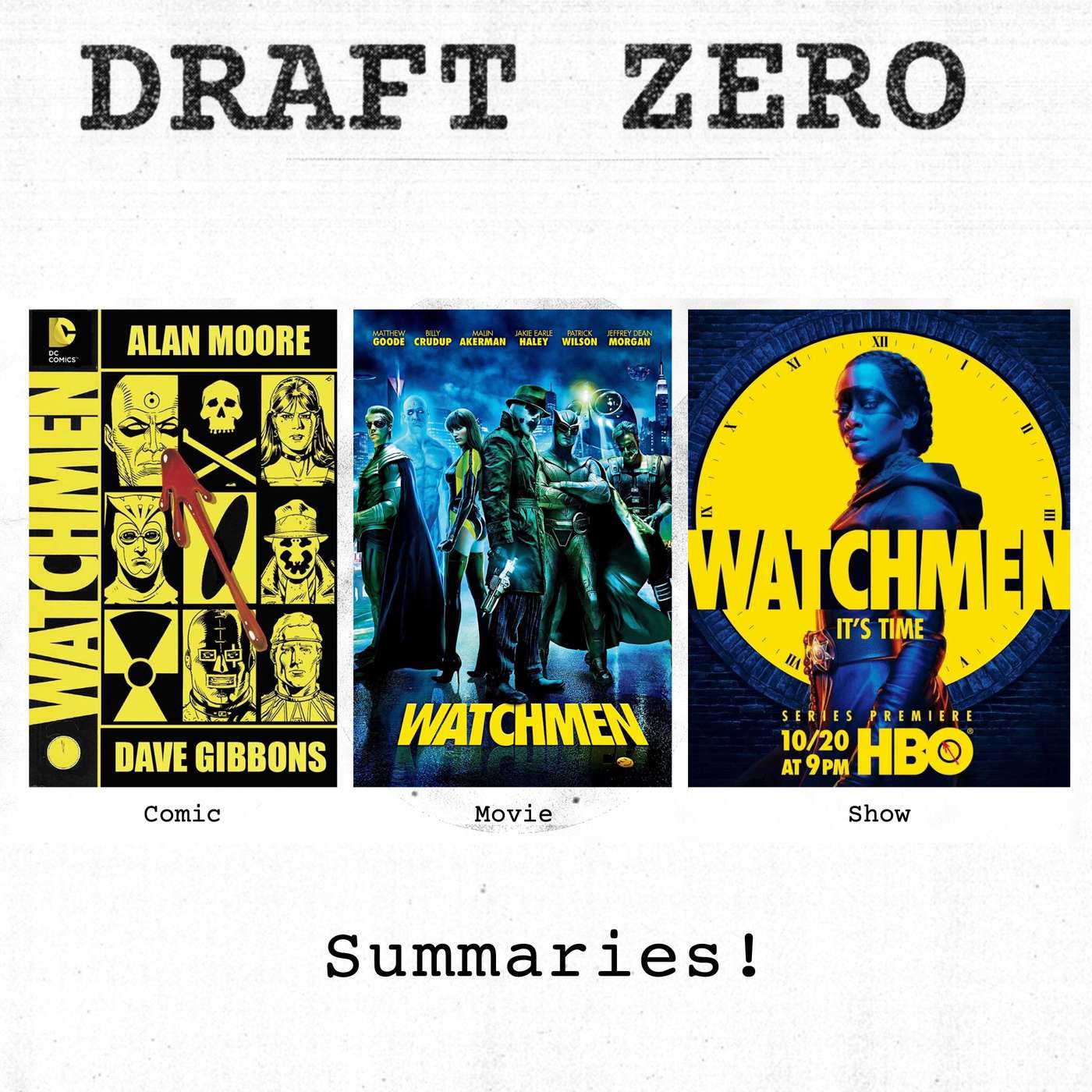
In this final podcast release of last year’s run of LiveSoLation episodes, Chas and Stu are joined by Uber-geek Mel Killingsworth (who else?) in an epic exploration of how Dave Gibbons’ and Alan Moore’s seminal graphic novel WATCHMEN is adapted differently in Zack Snyder’s 2009 film and
DZ-81: Pitch Decks & Look Books - Development Tools 4
Listen if you're preparing to pitch a project and want to understand how to create compelling visual materials
Chas and Stu are joined by writer/director/producer/multi-hyphenate Marc Furmie of Rezistor Studios to talk all things pitch decks and look books. Coming from an advertising and music video background, Marc shares his experience in putting together visual materials to pitch a pr
DZ-80: Interweaving Timelines 3 - Little Women
Listen to explore non-chronological structures can make work thematically resonant.
In our final part, part 3, of our Interweaving Timelines series, we — Chas, Stu & Mel — take a deep dive into Greta Gerwig's 2019 adaptation of Little Women. In her adaptation of Louisa May Alcott's iconic novels, Greta chose to interweave the seperate timelines of Little Women and it's sequel, Good W
DZ-79: Interweaving Timelines 2 - The Social Network
Listen to understand how manage stakes when you're using flashforwards.
In this Part 2 of Interweaving Timelines (aka The Stu Monologue Episode), Mel, Chas and Stu tackle Sorkin/Fincher's The Social Network. As you’ll hear, it is clearly Stu’s favourite of the examples we cover and, ah, not Mel’s favourite. While all three bring their own biases and opinions on the reality of Facebook as
DZ-78: Interweaving Timelines 1 - Destroyer
Listen when you're writting multiple timelines and struggling to anchor your reader to one timeline's perspective.
Stu and Chas are joined by Mel Killingsworth to dissect interweaving timelines. Not anthology films. Not Cloud Atlas. But films where two plot lines featuring the same characters, but from different timelines, are woven together.
How do you manage stakes when you know a cha
DZ-77: Backmatter - Prioritising and choosing projects
Listen if you're starting a new co-writing relationship, managing multiple projects, or wondering how to prioritize your next screenplay.
In their now-annual full backmatter episode, Stu and Chas let their hair down, drop the guise of objectivity, and allow themselves to have an even more subjective opinion about writing and the business of writing.
In this particular Backmatter entry,
DZ-76: Spotlight on Sofia Coppola
Listen to discover how Sofia Coppola crafts character performance on the page and uses whitespace to create her distinctive cinematic voice
Following the success of the Tips from Tarantino episode, we have again decided to look at three different scripts from over the course of a long screenwriting career from a single writer to see what we can learn. Our beloved patreons not only select
DZ-75: Fury Road & Visual Storytelling
Listen to hear how visual storytelling can carry an entire narrative with minimal dialogue.
Stu and Chas are joined by filmmaker, podcaster and writer Lia Matthew Brownn to deep dive into FURY ROAD and its astounding visual storytelling, both on the page and on screen. We talk about setups and payoffs, given circumstances, image systems, environmental storytelling, and how the relationsh
DZ-74: Midsommar & Folk Horror
Listen if you want to understand how folk horror works as a genre and how Ari Aster uses it to explore grief and toxic relationships
Draft Zero return with their next YouTube livestream! Stu and Chas are joined by previous guest (and successful screenwriter) C.S. McMullen for a deep dive into MIDSOMMAR! We analyse the film through the lens of Folk Horror, but tackle broader topics such a
DZ-73: Selling documents - Development Tools 3
Listen if you're preparing treatments, loglines, or outlines to pitch to producers or agencies.
In developing our stories and scripts, we have probably written some combination of treatments and loglines and outlines. Some of us have probably even sent these development materials out to producers or agencies when “selling” a project — as a step towards getting someone to read or gulp pro
DZ-72: Theme & The Story Synopsis - Development Tools 2
Listen tolearn concrete tools for developing theme in the early stages of your writing.
Continuing our look at tools used in development, Chas & Stu are joined by Stephen Cleary to talk about Theme, The Thematic Logline and what Stephen calls The Story Synopsis. All are tools to help writers better understand their theme and how it is dramatised. We use the classic film WITNESS as an
DZ-71: Treatments & Loglines - Development Tools 1
Listen to understand why a treatment isn't something to dread, but the plot-development tool that saves you months of writing.
Stu and Chas are joined by fan-favourite, Stephen Cleary, to NOT look at what makes great screenplays work -- but what makes great "short documents" work. We draw on Stephen Cleary's wealth of experience in developing work with writers, as a producer, as a scri
DZ-70: Joker & Melodrama
Listen if you're writing a character whose trauma becomes the engine of your entire narrative.
Draft Zero return with their next YouTube livestream! Stu and Chas take a deep dive into JOKER and analyse the film through the story paradigm of melodrama. Is it a melodrama? Why or why not does that matter? And does that influence how it has been written on the page?
They then answer listene
DZ-69: PARASITE & Audience Questions
Listen to understand how refusing to give your audience moral clarity can deepen their investment in character fates.
Draft Zero return with their next YouTube livestream! Stu and Chas take a deep dive into PARASITE and how its mastery of audience questions elevates the film. They then answer listeners questions on PARASITE and much more.
If you want to watch along instead of listen, yo
DZ-68: Using POV to structure KNIVES OUT
Listen to help you master the gap between what your audience knows and what your characters know.
Born out of isolation madness, this episode is an edited version of Draft Zero’s first YouTube livestream. Stu and Chas both watched KNIVES OUT and - together with our listeners - broke down each sequence and turning point by reference to what the audience knows in relation to the characters
DZ-67: Writing Passive Protagonists & Melodrama
Listen if you want to write powerful stories centred on characters without much agency.
Stu and Chas are joined by Stephen Cleary following his exploration into Melodrama, and together they try to reclaim the word from its pejorative meaning.
By examining powerful Melodramas - like THE HANDMAID’S TALE, LADIES IN BLACK and STRANGER THINGS… with many a tangent on MARRIAGE STORY, PETE’S DR
DZ LiVEsolation Annoucement
How does Draft Zero cope with lockdown? LINKS Facebook: http://facebook.com/draftzeropodcast/ Patreon: http://patreon.com/draftzero/ YouTube: https://www.youtube.com/channel/UCIEz5b9FMNa7Tj8DkcJQWRA Dear DZ Listeners, We hope you are all staying healthy and safe. Due this difficult time of lockdown, Chas and Stu have decided to "regularly" do special live-streamed episodes (via YouTube
DZ-66: The Mandalorian and The Rise of Skywalker - Audience Knowledge vs Character Motivation
Listen to understand how fan service weaponizes external knowledge against character logic.
By Order 66: Chas and Stu are joined by special guest - filmmaker Mel Killingsworth - to talk all things Star Wars. Well. Focusing on The Mandalorian and The Rise of Skywalker and wherever else our tangents take us.
Our primary lens is look at how both shows handle "fan service" — but really its
DZ-65: Collaborating with a Director - The Snip
Listen if you are thinking of producing your own short film!
This episode, Chas steps down as co-host (kinda) and is interviewed by Stu as a guest, alongside director Ben Mizzi, about the short rom-com that Chas wrote and Ben directed & produced. The episode covers taking an idea from pitch to screen, working with a director, directing performance on the page, and marketing and distr
DZ-64: Backmatter - Controlling your Work, Treatments, and Writing Styles
Listen to understand what you can control in your career--and what you absolutely cannot.
In our annual Backmatter-only episode, Stu and Chas indulge themselves by offering personal opinions on the life and work of emerging screenwriters based on their own personal experience.
To that end, they discuss: what is and is not in your control in relation to an emerging writing career; choosi
DZ-63: Tools for Better Dialogue 2 - Hook and Eye
Listen when you're rewriting dialogue and want to create connection between characters.
A full three years after the first instalment (and one of our most popular), Stu and Chas have kidnapped Stephen Cleary to once again develop some craft tools around dialogue. It would be fair to say that - in that time - all three have learnt a lot more about dialogue than they knew in 2016. It would
DZ-62: Unfilmables 3 - As Ifs & Emotional Context
Listen if you want to learn how to write tone and emotional context on the page.
In this third and final part of our series on unfilmables, Chas and Stu turn their critical eye to... each other’s work! They take their key learnings from the previous episodes and apply them to rewriting scenes from their own projects. They discuss metaphors, emotional context, and how you can write tone o
DZ-61: Unfilmables 2 - Moments of Awe
Listen if you're writing a moment that feels too big for the page (but you need it on the page).
In this second part of our series on unfilmables, Chas and Stu continue their deep dive into how writing the “unfilmable” can enhance your script. Rather than looking at micro moments, they turn their gaze to "moments of awe" — those often breathtaking cinematic moments that feel beyond writi
DZ-60: Unfilmables 1 - Engaging imagination
Listen to discover how *produced* screenplays use unfilmables to shape tone, performance, and humour on the page.
AKA Why your screenwriting guru is wrong
In this episode, Chas and Stu deep dive into the controversial area of “unfilmables” — those alleged screenwriting sins, where a writer writes a line that (apparently) cannot be seen or heard. But many produced spec scripts use unfil
DZ-59: Avengers Endgame - Ending Character Journeys
Listen if you're interested in how to dramatise character change, position your audience in relation to characters, and explore the difference between empathy and sympathy in screenwriting
One day, Chas saw Avengers: Endgame for the second time and wrote a review on Letterboxd. In particular, he had issues with how little he perceived the characters of Cap and Tony changed within the fil
DZ-58: Game of Thrones - Character Exposition
Listen to understand why what a character *doesn't* say reveals more than exposition ever could.
In watching Season 7 (and the first three episodes of Season 8) of Game of Thrones, Stu noticed that there were lots of scenes where characters either met for the first time or were reunited after a long time apart. In these scenes, the audience knows (or thinks they know) more than either ch
DZ-57: Backmatter - Aesthetics and Forgiveness in Writing
Listen if you need to forgive yourself (for not writing)
It is time (in fact, well past time) for our semi-annual #Backmatter episode. For the uninitiated, this is an episode where Stu and Chas discuss career and craft-related topics beyond what makes great screenplays work. To that end, Stu and Chas dive into: a five year review of Draft Zero and how it has changed their writing craft a
DZ-56: Character Motivations 2
Listen if you want to understand how character decisions can break a screenplay and how to fix them
In this second part of their exploration of character motivations, Chas and Stu dive into what makes “BAD” screenplays NOT work. They examine at moments where they (and maybe you, dear listeners) did not believe a key decision being made by a character and so were taken out of the movie.
DZ-55: Character Motivations 1
Listen if you're writing a scene where your character does something 'out of character' and your readers to buy it.
Chas & Stu look at examples of good character motivation. We’ve all watched movies where we don’t believe the motivation of a character or characters. We may have even written scripts where readers don’t buy the character’s choices. And that’s often a real problem becau
DZ-54: Thematic Sequences
Listen if you want to make theme your primary driver (for a sequence)
Chas and Stu are joined, once again, by the inestimable Stephen Cleary. This episode is a spiritual sequel to our last episode with Stephen, the one on sequence structure. That episode explored how sequences could be broken into plot, character, and plot/character sequences.
Well, Stephen’s back to talk about a differ