Soils For Life
The Soils for Life podcast shares the voices of farmers across Australia who are regenerating soils and landscapes. Each episode features farmers discovering ways to work with nature, and explores how more growers can move in that direction. The stories show how healthy, regenerated soils can support profitable food-producing businesses, resilient people and thriving regional communities. It is produced by the Grow Love Project together with Soils for Life.
Episodes
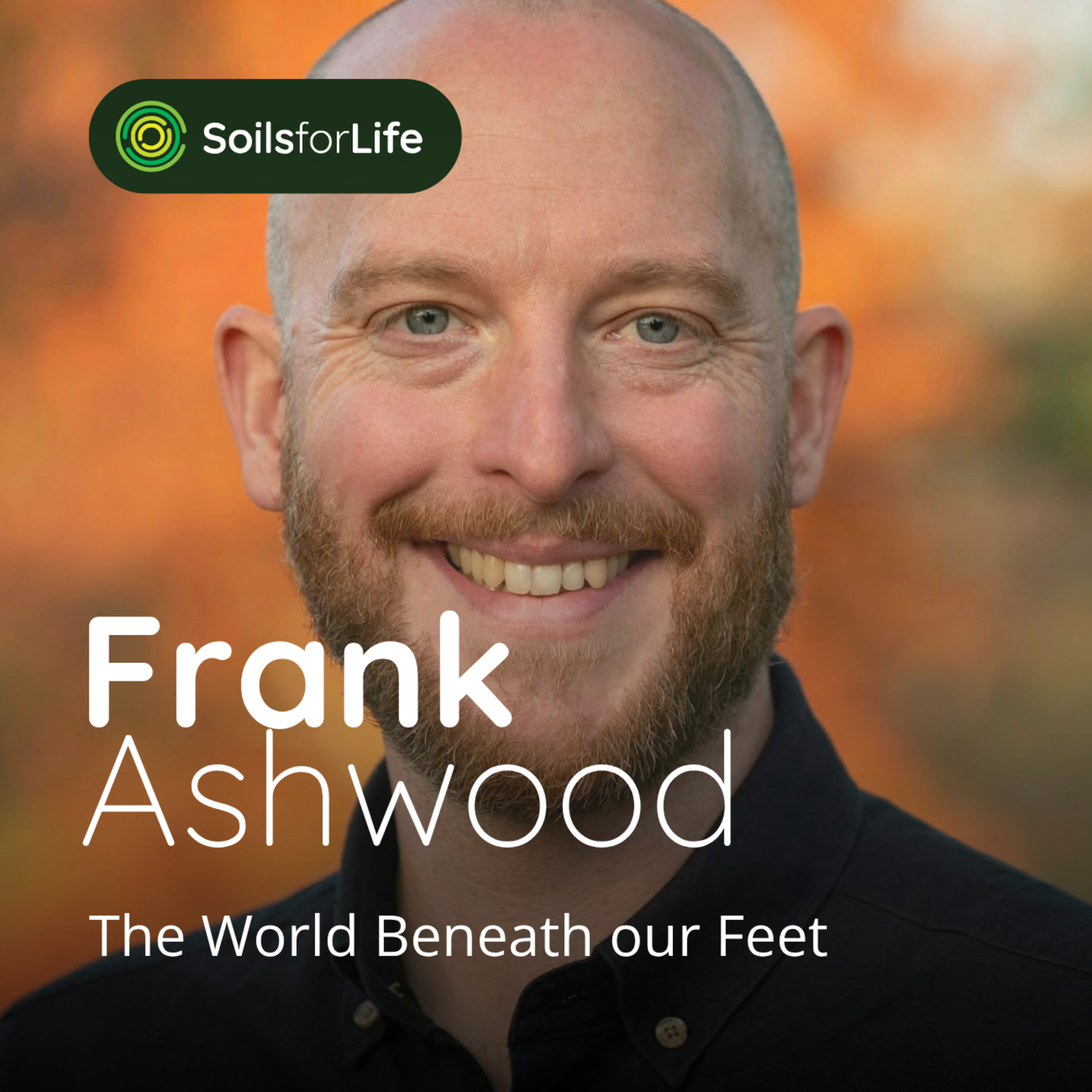
The World Beneath our Feet, with macrophotographer and soil ecologist Frank Ashwood
Today’s guest Frank Ashwood is a soil ecologist with a side passion for macrophotography - photographing the incredible creatures and organisms living in the soil.He has an academic background in biology and land restoration to woodland. He mostly studies the biological diversity and associated functions of forest soils, but three years ago Soils for Life brought Frank Ashwood to Australia to turn
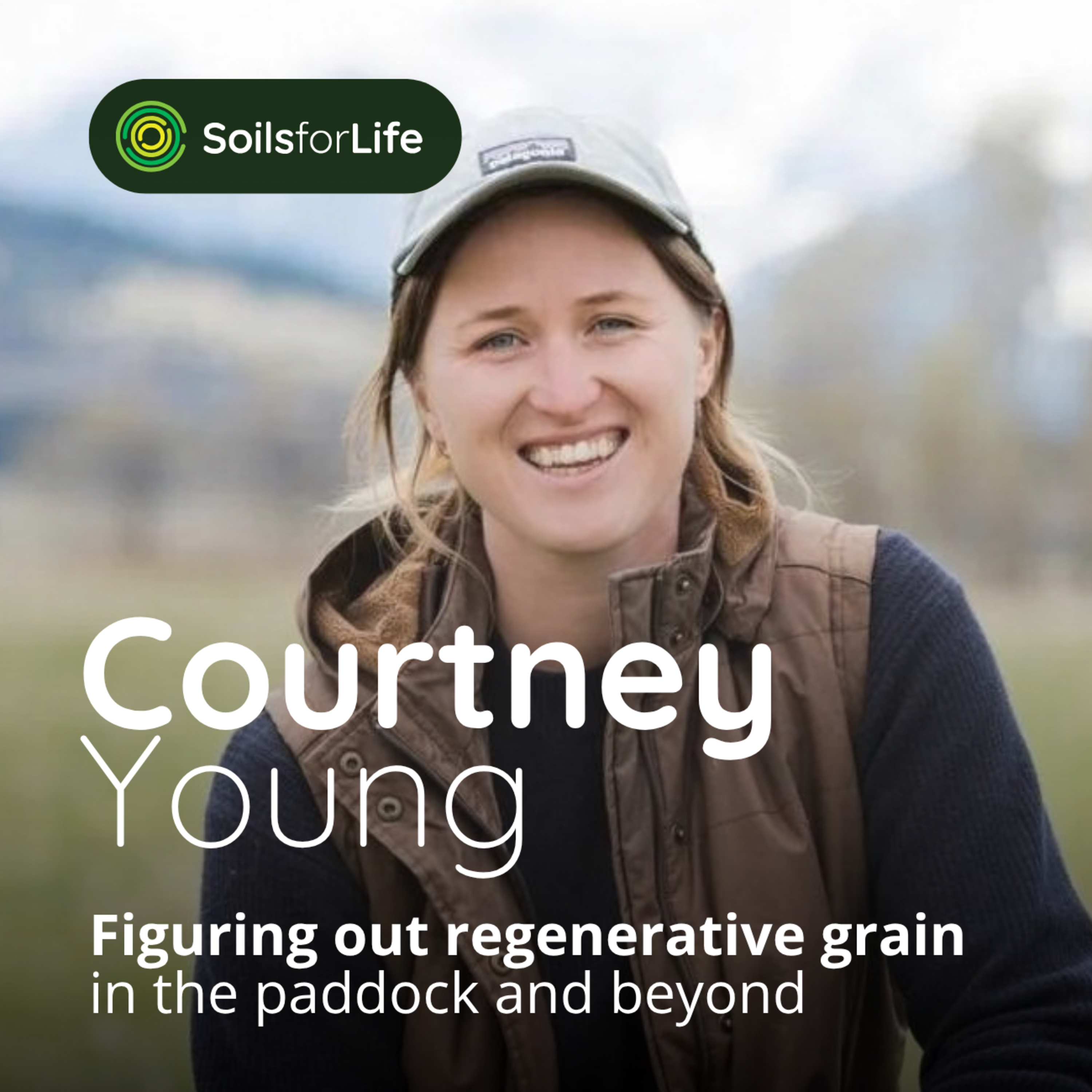
Figuring out regenerative grain in the paddock and beyond, with Courtney Young
Courtney Young farms organic grain with her husband Ian in Rutherglen, Victoria, and is also Soils for Life's Farmer Learning Manager. In this episode, she talks with Eli about building a farming life from scratch, growing healthy soil and grain, and turning wheat into a value-added business.In this episodeHow Courtney's path into farming began, from her dad's oyster farming on the NSW
The network underpinning it all: Fungi with Dr Sapphire McMullan-Fisher and Julie Fielder
World Fungus Day is in October and to mark the occasion we spoke with two mycologists - fungi experts - Dr Sapphire McMullan-Fisher and Julie Fielder about this amazing and mostly hidden lifeform.Sapphire is a lecturer in plant and fungal Ecology at the University of New England and Julie runs consultancy Phytos Environmental in WA, and both are involved with Fungimap, one of Australia’s longest r
From feeding animals to feeding biology: Learning to graze differently with David and Ruth Read
About the podcastDavid and Ruth Read own and manage Woodcote, a 470 hectare beef cattle trading farm located in East Gippsland, Victoria. In this episode, we talk about:How the Millennium Drought sounded a wake-up call for their farmThe changes they have made since that time including moving towards higher density grazing, establishment of fencing and water infrastructure to support thatShifting t
Feeding the soil first: Hugh and Katie Finlay on diversity at every level
Hugh and Katie Finlay manage a 30 hectare farm in Central Victoria, including a commercial stone fruit orchard and fruit tree nursery. The farm also includes a range of small enterprises run by others under the banner of the Harcourt Farming Co-op, including a dairy, market garden, and bush foods plot.Since 2013, Hugh and Katie also have been educating others in how to grow organic and regenerativ
Creating diversity above and below the ground: Murray Gomm on cover crops in orchards and vineyards
Murray Gomm is a regenerative farmer and winemaker based near Albany in Western Australia. With his partner Pamela Lincoln, he runs Oranje Tractor Farm, a small organic vineyard and orchard that’s become known for its focus on soil health, biodiversity and carbon-positive farming.Since the late 1990s, Murray has transformed a degraded property into a thriving, diverse landscape producing wine, fru
The power of pasture analysis, with Emily House
Emily House began her career as a geologist before an unlikely path led her into ruminant nutrition. After moving to New Zealand, she started working with two vets who wanted to shift from treating livestock disease reactively to preventing it, which meant looking closely at pasture as the major component of the diet. Emily brings a background in earth science to her work interpreting pasture and
Regenerative grazing and the key insights of Holistic Management, with Brian Wehlburg
Brian Wehlburg is one of Australia’s most highly regarded Holistic Management educators and a board member of Holistic Management International and the Australian Holistic Management Cooperative. He has delivered training and consulting to businesses, land managers, families, environmental groups and pastoralists all over Australia, as well as in New Zealand, USA and Zimbabwe. He is also a farmer
Building confidence in multispecies pastures, with Grant Williams
Grant Williams is a dairy farmer at Hallora in West Gippsland, Victoria, where he and his wife Leesa run Willora Farms - an almost 600-cow operation across 430 hectares. He has been a generous and engaged contributor to the dairy community for many years, and previously served on the Board and as Chair of GippsDairy.Despite having been an early adopter of robotic milking, Grant describes himself a
Working with biological control agents in perennial horticulture, with Dr Paul Horne
Dr Paul Horne is an award winning entomologist and founder of integrated pest management consultancy IPM Technologies. He began his career at the Victorian Department of Agriculture in the mid-1980s, his work has been published across scientific journals and industry platforms, and he has written several books on insects and pest management.Paul’s work focuses on supporting adoption of IPM strateg
Managing risk in grazing through safe-to-fail farm trials, with Graeme Hand
Graeme Hand is a holistic land management and grazing educator based near Bairnsdale, Victoria, where he has farmed for more than 35 years. He came to the land via an unlikely route, a decade as an industrial chemist, before applying that scientific background to regenerative agriculture. A Certified Holistic Management educator and Board member of Regenerative Agriculture Network Tasmania, Graeme
‘Intensification’ through biology, synergy and farming deeper and higher, with Gavin Fisher
Find out more and register for the special event to launch our Introductory Guide to Grazing for Soil and Landscape Health, on 20 May at Nick Austin’s farm in Mundarlo, NSW (near Wagga) - events.humanitix.com/grazinglaunchfielddayThis episode was recorded live at the third Grounded Festival at Yan Yan Gurt West farm in Victoria’s Otways. One of my highlights of the festival was hearing from third-
Tracking milk quality, profit and soil health: A five year regenerative trial.
What happens when a commercial dairy farm runs regenerative and conventional systems side-by-side, and measures the results?In this episode, Clare Buchanan from Align Farms shares insights from an ongoing trial in Mid Canterbury, New Zealand. Half the farm is managed conventionally, while the other half uses diverse pastures, lower synthetic inputs and a different approach to grazing and stocking.
RAPID RESPONSE: Managing the nitrogen fertiliser crisis, with Joel Williams
Australia's fertiliser crisis has been building for weeks as a result of the conflict in the Middle East. Around 60 per cent of Australia's urea imports travel through the Strait of Hormuz, which has been severely disrupted, leaving shipments stranded and future orders cancelled.Some reports suggest urea prices have already more than doubled since December 2025, from around US$350 per tonne to US$
Studying regenerative agriculture at scale: The human experience behind the hard data, with Dr Jonathan Lundgren
Dr Jonathan Lundgren runs 1,000 Farms, the largest and most comprehensive study of regenerative agriculture anywhere in the world. Despite the name, the program now includes more than 2,000 farms across all eco-regions in North America, with a minimum of 500 data types for each farm, including data on production, economics, soil, water, biodiversity, carbon, nutrition and more. The results - accor
Nature’s army: Using functional biodiversity for biocontrol in orchards, with Dr Mary Retallack
Dr Mary Retallack is an agricultural scientist, third-generation viticulturist and agroecologist who has spent more than three decades advancing environmental stewardship within agricultural landscapes. She grew up on a fruit block in SA's Riverland growing grapes, apricots and pears, and now lives on a small vineyard and apple orchard surrounded by native insectary plants in the Adelaide Hill
Milk, the original superfood, with Matthew Evans
Matthew Evans is a chef, farmer, author, food advocate and founder of Australia's Grounded Festival (coming up in April - tickets available at groundedaustralia.com.au).Soils for Life is kicking off a new national program working with dairy farmers around the country (join our launch event in March, details via https://events.humanitix.com/dairy-profitability-and-resilience-through-diversity-a
A sneak peek at 'Soil - Rewilding the Underground'
Today, we’re bringing you something a little different. I’ve recently been involved in a new podcast series called 'Soil: Rewilding the Underground'. It does a fantastic job of telling the big picture story of soil, why it’s so important not just for farmers and food production, but also for water, for biodiversity, for climate stability, and for human health.Today we’re giving you a sneak
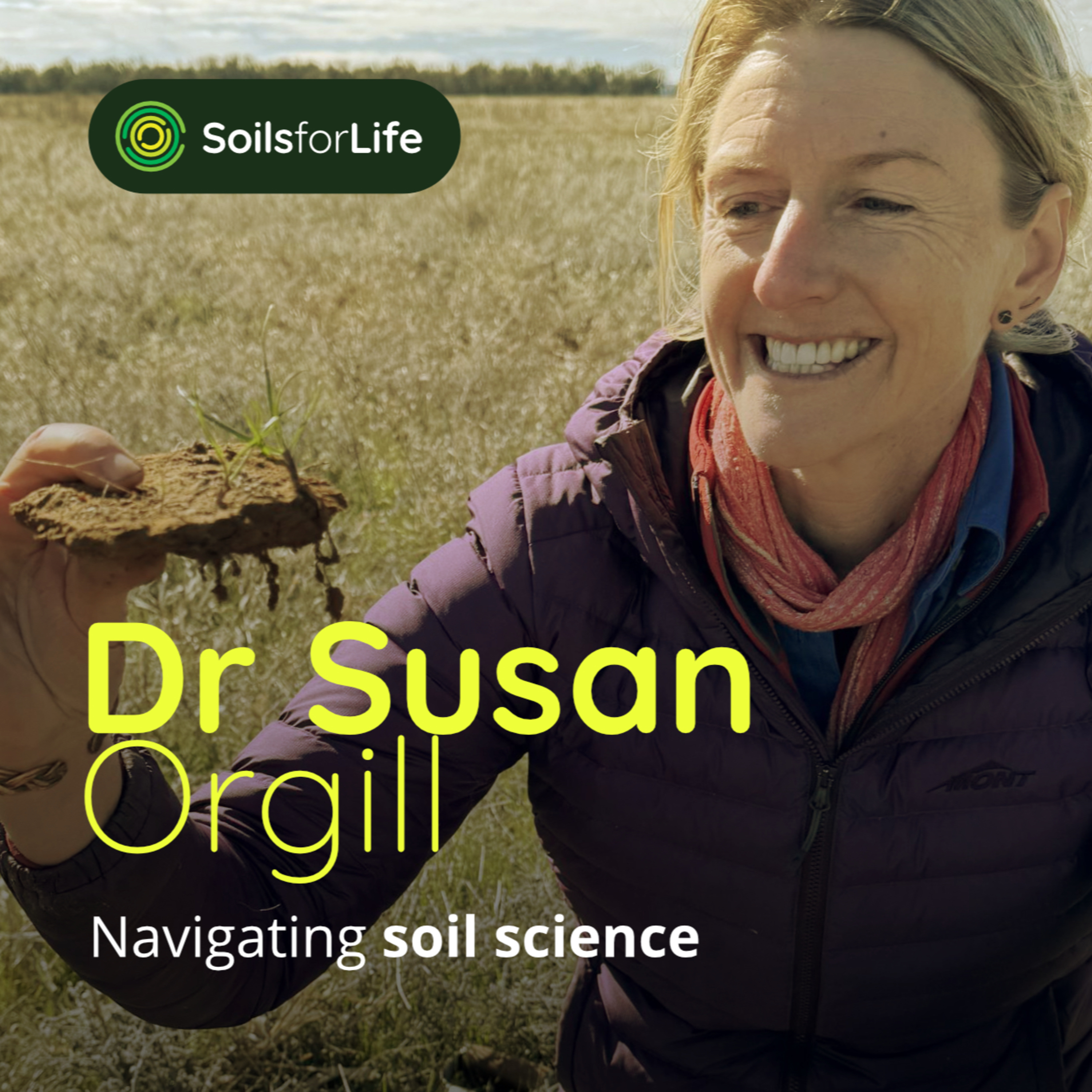
Navigating soil science, with Dr Susan Orgill
Dr Susan Orgill is Chief Scientist at Impact Ag Australia and a leading soil scientist with more than 20 years’ experience. She specialises in soil health, carbon farming, and regenerative agriculture, delivering science-based strategies that improve farm resilience, natural capital, and climate outcomes across research, policy, and sustainability initiatives.Suz has long been a friend of Soils fo
Earning the right to reduce pesticides: Building plant resilience with Brad Campbell
Western Australian farmer Brad Campbell has spent years refining his mixed cropping system to build healthier, more resilient plants and reduce reliance on synthetic inputs. Over time, he’s cut out routine fungicides and insecticides, moved away from chemical seed treatments, and now only uses pesticides strategically when needed.In this conversation, Brad talks about how targeted plant nutrition,
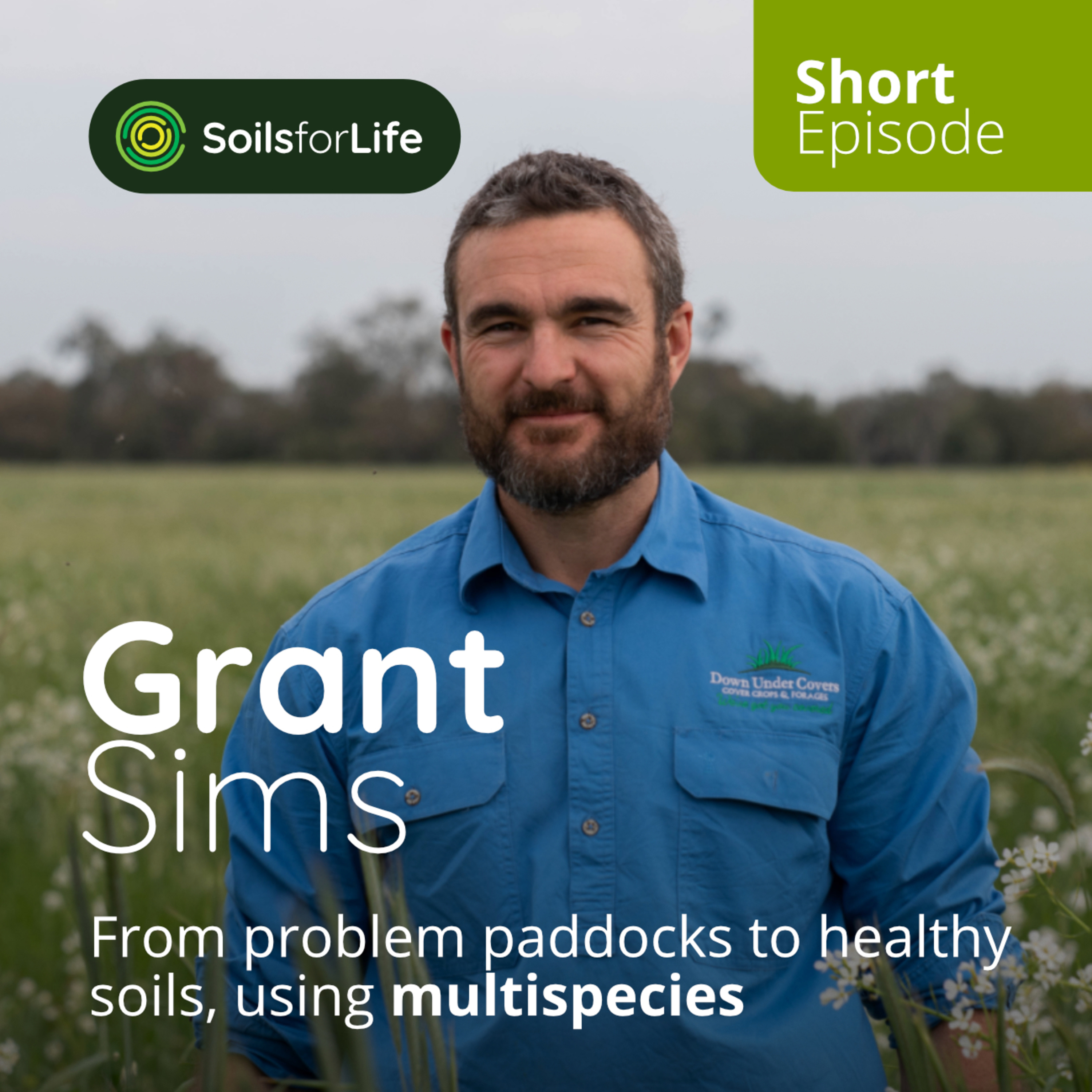
SHORT: From problem paddocks to healthy soils, multispecies with Grant Sims
This episode of the Soils for Life podcast is part of our series of mini-episodes with farmers profiled in our series of cropping practice guides.In this short episode, Eli Court chats with Victorian farmer Grant Sims about how multispecies cover cropping has transformed his mixed farming system at Pine Grove near Lockington. After moving away from synthetic fertilisers, fungicides and insecticide

Encore: Weeds are telling us something, are we listening?
We recently attended Grounded in WA, and heard ecologist Dr David Watson's fascinating talk on the important role that mistletoe can play in farm ecosystem. It made us think of one of our favourite podcast episodes - this one. It's a dive into the role that so-called weeds can play in ecosystems. Well worth another run! Enjoy.A little about this episode:The industrialisation of agriculture
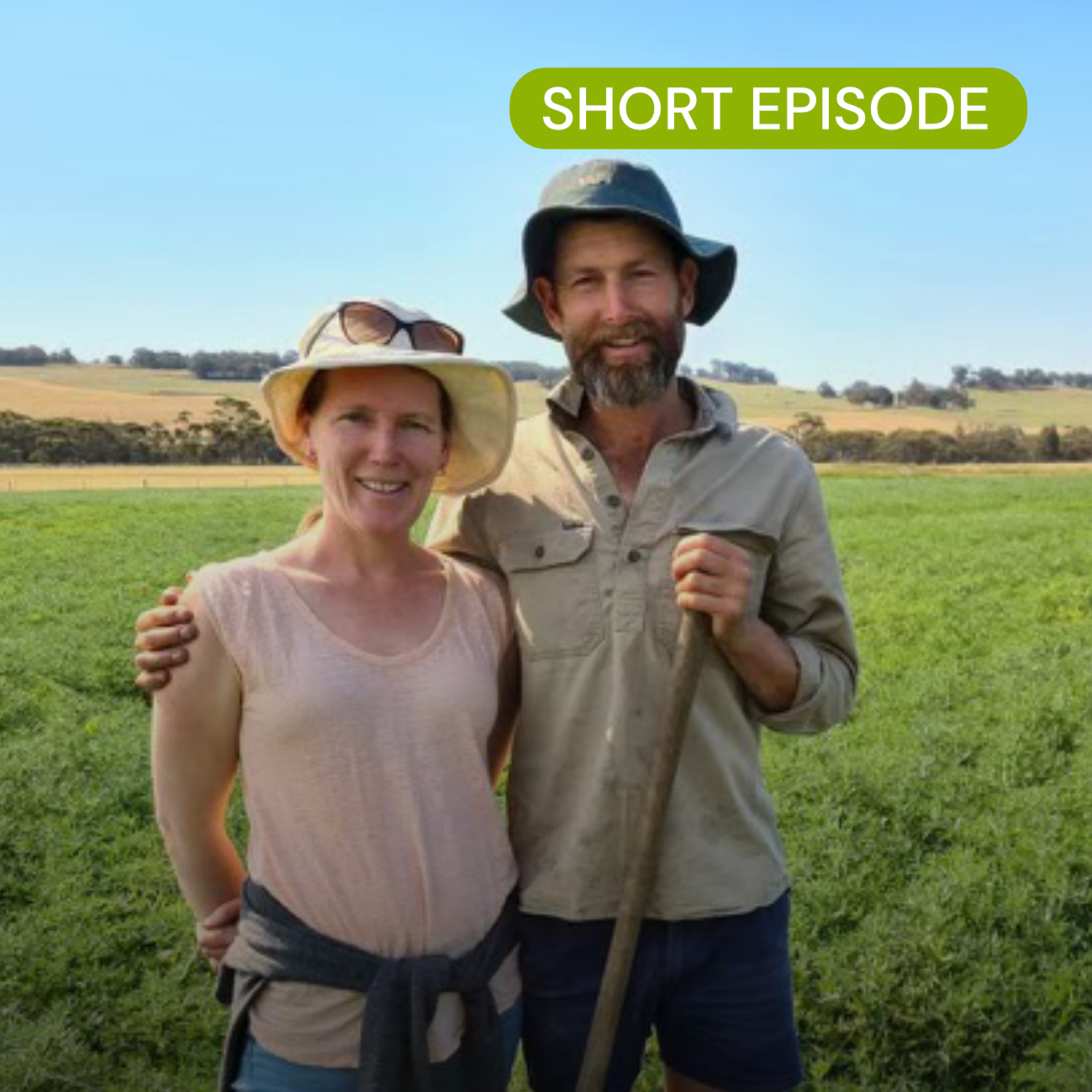
SHORT: Moving to a low risk, low input system one step at a time, with Steven Ford
This episode of the Soils for Life podcast is part of our series of mini-episodes with farmers profiled in our series of cropping practice guides.In this episode we talk with Steven Ford. Steven and his wife Kelly have been farming near Williams, Western Australia, for 16 years. After 10 years working as a livestock agent, Steven returned to the family farm in 2008. Being advised to use a new expe
“We are walking ecosystems”: Our symbiotic relationships with microbes, with Jake Robinson
Jake Robinson is a microbial ecologist and researcher whose career spans parasitology, symbiosis, and the study of invisible communities of life that shape the health of humans, animals, plants and ecosystems. He is the author of Invisible Friends: How Microbes Shape Our Lives and the World Around Us, and his work explores the connections between soil health, gut health and mental health.We spoke
SHORT: Getting foliars right, with Tom Robinson
This episode is part of a series of short conversations with the farmers profiled in our cropping practice guides. For Tom Robinson, foliar sprays aren’t a magic fix, but they’ve become a game-changer. Guided by sap testing and years of trialling, they’re helping him hit crop nutrition targets and lift grain performance while fitting into a broader soil health strategy.In this episode, Tom shares
Navigating uncertainty: Practical paths to resilient farming systems, with Nicole Masters
Nicole Masters is an agroecologist, educator and author with decades of experience working alongside farmers and land managers across Australia, New Zealand, North America and beyond. She is formally trained in soil science, organisational learning and adult education, and is known for taking a practical, systems-based approach to regenerating land and building resilient farm businesses. Nicole is
SHORT: Feeding cane by building biology - Michael Waring on soil health and nitrogen cycling in the tropics
This is the first in a series of short episodes we’ll be releasing over the coming months featuring farmers profiled in our series of regenerative cropping Practice Guides. Check out the full suite of guides at www.soilsforlife.org.au.Michael Waring is a North Queensland sugarcane grower with decades of experience improving nitrogen cycling and soil health. Michael walks us through his journey fro
Letting the microbial superstars do the work, simple steps to build soil biology, with Dr Mary Cole
Dr Mary Cole has spent more than 40 years working with the microbial life that underpins healthy soil. In this episode, she shares what she's learned from a career in plant pathology and soil microbiology, and from farming using compost products, aeration and no synthetic inputs on her own property in Gippsland Victoria.Mary explains how simple practices like aeration, compost, and soil and pl
The farming communities restoring natural water cycles — one catchment at a time
Australia has often been described as a land of droughts and flooding rains. But what we don’t often hear is that, for millennia, the land had a remarkable ability to regulate itself — through healthy ecology and the natural water cycle.Since European settlement, however, we've seen a steady decline in soil health and water-holding capacity across much of the country. The rivers don’t flow lik
Farmers helping farmers, with VicNoTill President Mick Gooden
Mick Gooden runs Old Man Creek Bull Farm near Wagga Wagga in NSW and is President of farmer group Vic No Till.In this episode, Eli and Mick chat about the value of having a supportive group of peers around you, the links between soil health and human health, the importance of pulling up and taking the time for observation and reflection, transitioning cropping systems profitably, leveraging the po
The ‘mad bastard’ growing veggies for Sydney’s top restaurants, with Phil Lavers
Phil Lavers is passionate about good food. He runs Moonacres, a 140 acre fruit and vegetable farm in the NSW Southern Highlands, and sells his award-winning certified organic produce direct to some of Sydney’s best restaurants.Phil is not a guy to beat around the bush. He sees big problems with typical practices in fruit and vegetable farming and the impacts those practices have on the soil, the e
Making decisions in the dry, with Martin Royds
With record dry conditions across eastern Australia and many of you facing difficult decisions, we wanted to have a chat with Braidwood farmer Martin Royds to share his thoughts and experiences with making decisions in the dry, and coping with the emotional toll of seeing the landscape go backwards.Read more about Martin Royds’ approach to building landscape resilience - https://soilsforlife.org.a
Diversity is king: How four dairy farmers are building profitability and resilience with multispecies pastures
Can dairy systems support soil health, productivity and profitability at the same time?In this episode we meet four dairy farmers who are exploring that question. Kate Mirams, Simon Schulz, Sandra Jefford and Chris Eggert share their experiences with introducing diversity into their pastures and farming systems—what motivated them, what they tried, and what they’ve learned so far.We also hear from
Farming for what matters, putting profit and human wellbeing before yield, with Gabe Brown
In this episode we talk with Gabe Brown, a farmer and educator from North Dakota. Gabe and his family run Brown's Ranch, a 6, 000 acre operation that's become a model for regenerating land.After years of tough seasons and crop failures, Gabe recognized a need to build a farming system that works with nature instead of against it. Through no till, cover crops, diverse rotations and integra
Restoring the water cycle on the Monaro, with Charlie Maslin
Over the years we’ve heard from many farmers about creeks and rivers that are severely eroded, and landscapes that have lost their ability to absorb and store water. In big rain events water runs off and is gone in a matter of days or even hours. We’ve become accustomed to this, but what did those landscapes look and function like 100 years ago, or 200 years ago? Can farmers restore creeks and lan
Planting with purpose, with Jill Clapperton
Jill Clapperton is a farmer and applied rhizosphere ecologist. She grows crops with integrated livestock in Kansas in the U.S. and advises farmers the world over. Talking with Jill was eye opening and fun. We go big talking about gaia theory and the interconnectedness of all life on Earth. But we mostly dive deep into the fascinating ecological communities that plants create above and below the g
Behind the scenes of Goodies Farm, with Penny Goodwin
Taking the first steps into regenerative agriculture can be intimidating. In this episode of the Soils for Life podcast, Eli Court has a chat with Penny Goodwin from Goodies Farm in Kendenup, WA
Goodies Farm grows an incredible variety of crops, with minimal inputs, and is an integral part of the south west WA food system.
While things can look nice and shiny on the outside, Penny very generousl
Regenerative trailblazers share their stories from the Soil Stewardship Summit
Ever wondered about regenerative agriculture and the impacts it can have on farmers? Join us as we learn about real life experiences shared by seasoned farmers at the recent Soil Stewardship Summit near Yass, NSW. Over two enlightening days, participants explored the concept of regenerative agriculture, discussing key topics such as tapping into indigenous wisdom, enhancing drought resilience, tra
Rain ready rangelands: Staggering potential on a vast scale
The United Nations General Assembly recently voted 2026 as the International Year of the Rangelands and Pastoralists. An incredible 81 percent of Australia is considered rangelands, and despite the sometimes challenging conditions, the opportunities for landscape repair through agriculture are immense.
In this episode, we hear from three farmers who all grew up in the semi-arid rangelands with a
Small steps for big change in cropping, with Joel Williams
In this episode we talk with Joel Williams about how growers can start weaning off costly chemical inputs, rules of thumb for seed treatments and foliar sprays, why he likes tweaks and incremental improvements, the growing scientific evidence behind regenerative farming practices and more!
Joel Williams is an independent plant and soil health educator based in Canada, working on soil management,
You are what you eat… and the soil it’s grown in: Is soil the key to better human health?
We’ve all heard the saying “You are what you eat”. But, as we'll hear in this episode, it really should go “You are what you eat, and the soil it grows in.”
Over half of our adult population are considered to be malnourished, and this is in part due to a decline in the nutrient density of our food. As the world's population grows and remaining arable land decreases, growing healthier, nutr
Mick Green and Rachel Ward on the power of getting started
If you’re a long-time listener to this podcast, you’ll be used to our in-depth episodes co-hosted by Grow Love Project’s Susie Kable and Soils for Life’s James Diack. We’re continuing to make these episodes, but from time-to-time we’ll be bringing you shorter interviews with farmers doing interesting things to regenerate soils and landscapes. This is the first of these interviews, with actress-tur
From monoculture to multispecies cropping: Making diversity work
Building cropping resilience through diversity
In this episode we hear from croppers who are growing multispecies crops as a way of building soil health and improving diversity. We discover why and how these farmers are moving from growing monocultures to establishing polycultures.
Find out more about how croppers around Australia are regenerating soil and landscape health by reading Soils for Li

Weeds are telling us something - are we listening?
The industrialisation of agriculture has created large paddocks of monoculture crops and increased the chemical burden on farmers and their environments. Global herbicide use has continued to increase as farmers have shifted to no till practices and adopted herbicide-tolerant crop cultivars over the last 30 years. One result of this is that the list of herbicide resistant #weeds is growing.
Some f
Farmer led research – embracing complexity
Agricultural scientific research is really good at honing in on specific issues in the sector to investigate targeted solutions. But nature doesn’t always work that way. A fundamental principle of regenerative agriculture is to observe landscapes as a whole system and to build resilience by embracing ecological complexity.
The importance of farmer and researcher collaboration is highlighted in thi
Next Generation Farming Matters
Australian agriculture currently has a labour shortage of over 100,000 people. It’s not an easy gig for someone to start from scratch on a farm and many younger generation farmers are moving from farms to urban areas.
We rely on farmers to sustain our way of life as they produce our food and fibre. It’s critical that young and new farmers are encouraged and supported to supply for our needs in a w
Working Together And Navigating Environmental Markets
The 8 families farmer group formed more than a decade ago after a holistic management course. Since then, the group has evolved and experienced transitions in all the businesses and families.
In this episode we explore environmental markets through the lens of two members of the 8 Families group. The 8 families explain how their motivation to build natural capital was not primarily to gain market

The Missing Middle: Farming Trees for Conservation and Profit
Farmer, forester or conservationist. It might seem like you need to choose one but more and more landholders are challenging this. With the right management, trees on farms can provide better farm productivity and forest products and increase biodiversity. But in many ways forests are still treated as either conservation reserves or plantations, making it difficult for farmers to take this pa
Compost ain't compost
There are millions of hectares of degraded soils in Australia's agricultural landscapes. But there are a billion reasons why compost offers a solution to this problem, teeming with micro-organisms and organic matter that can help regenerate soils. But not all composts are the same and there is still a lot that we're learning about this precious, carbon rich resource. How can governments, farmers a
The Great Soil Carbon Catalyst?
How could the emerging market for soil carbon support farmers to regenerate soils?
Soil carbon offers so many benefits both above and below the soil surface, from improving farm productivity to revenue raising in carbon trading. But while the case for building soil carbon is clear, the carbon market is still evolving. So what’s the potential, what are the risks and what can be done to unlock the p